
Introduction
The business landscape is constantly evolving, driven by rapid technological advancements and shifting customer expectations. For B2B companies, simply having a strong product or service is no longer enough. We must strategically integrate advanced IT solutions with sophisticated digital marketing efforts to maintain a competitive edge and unlock true operational efficiency.
This integration is critical for optimizing every aspect of our operations, from initial lead generation to long-term customer engagement. By embracing the right B2B technology solutions, we can streamline processes, make data-driven decisions, and deliver exceptional value to our clients.
In this extensive guide, we will explore B2B technology solutions. We will delve into core services like lead generation, account-based marketing, and content strategies. We will also examine how AI, automation, and data analytics are transforming B2B marketing, improving lead quality, and driving measurable return on investment. Join us as we uncover how to leverage these powerful tools to optimize business operations and accelerate growth in today’s dynamic market.
The Evolution of B2B Technology Solutions
 At its core, B2B technology solutions encompass a wide array of tools, platforms, and services designed to help businesses operate more efficiently, connect with customers, and drive revenue. These solutions are not just about building technology; they are about solving complex business problems strategically through technological innovation. In the realm of lead generation and B2B marketing, these solutions offer critical services including robust lead generation strategies, targeted email marketing campaigns, sophisticated account-based marketing (ABM), insightful intent data analysis, and compelling content marketing.
The landscape of B2B technology solutions is dynamic, with providers constantly adapting to market needs. For instance, a company like B2B Technology Solutions, headquartered in Jersey City, New Jersey, demonstrates this adaptability by offering services across 13 distinct categories, including the aforementioned lead generation, email marketing, ABM, and content marketing. This breadth of service allows them to address diverse client needs.
Examining the operational footprint of such providers offers further insight. B2B Technology Solutions, founded in 2020, currently employs a team of 5 dedicated professionals. While this represents a -45.5% year-over-year decline in employee count since its inception, the company maintains a global presence with three office locations across the United States. Its workforce is distributed internationally, with 50% of employees based in India, 17% in the United States, and 17% in the United Kingdom. This global distribution highlights a common trend among B2B tech solution providers to leverage diverse talent pools. Furthermore, their digital presence is growing, with 886 LinkedIn followers, showing a healthy +35.9% yearly growth and +1.8% monthly growth, indicating active engagement and increasing brand visibility.
What truly differentiates a leading B2B technology solutions provider from a general marketing agency is its strategic, technology-first approach to problem-solving. Instead of merely executing campaigns, these providers focus on integrating technological frameworks that create sustainable growth. They delve into the specific challenges of B2B sales cycles, which often involve longer decision-making processes and multiple stakeholders. This requires a nuanced understanding of how technology can streamline these complexities, from initial outreach to deal closure. We believe that offering truly Flexible B2B Technology Solutions is paramount, allowing businesses to adapt and scale their operations without being constrained by rigid systems.
Core Services in Lead Generation and Marketing
The engine of B2B growth is fueled by effective lead generation and marketing. Modern B2B technology solutions have refined these processes significantly.
Account-Based Marketing (ABM): ABM is a highly targeted strategy where marketing and sales teams work in concert to engage specific high-value accounts. B2B technology solutions enhance ABM by providing platforms that help identify ideal customer profiles, map decision-maker hierarchies, and orchestrate personalized outreach. Key features include advanced segmentation tools, CRM integration for a unified view of accounts, and automated workflows for consistent engagement. The benefits are clear: higher conversion rates, stronger account relationships, and a more efficient use of marketing resources. For businesses looking to implement ABM, resources like those found on TechB2BSolutions often provide valuable whitepapers and case studies, including RFP templates for selecting the right ABM platform.
Intent Data: Understanding buyer intent is a game-changer. Intent data, gathered from online behaviors (e.g., content consumption, search queries, website visits), signals a prospect’s interest in a particular product or service. B2B technology solutions leverage this data to identify “in-market” buyers, allowing sales and marketing teams to prioritize efforts and tailor messages with pinpoint accuracy. This predictive capability significantly improves lead quality and reduces wasted effort.
Content Marketing: In the B2B space, content is king for educating prospects and establishing thought leadership. B2B technology solutions support content marketing by providing tools for content creation, distribution, and performance analysis. This includes platforms for managing whitepapers, case studies, and webinars, ensuring that valuable insights reach the right audience at the right time. Interactive content, a growing trend, also falls under this umbrella, using quizzes, calculators, and personalized experiences to engage prospects more deeply. The goal is to nurture leads through the sales funnel with relevant, high-value information.
Many B2B technology solution providers, such as the company B2B Technology Solutions, actively engage with their audience and share insights on platforms like LinkedIn, demonstrating their commitment to thought leadership and community engagement in these critical service areas.
The Role of Managed IT and Cloud Infrastructure
Beyond marketing, a robust and secure IT infrastructure is the backbone of any successful B2B operation. B2B technology solutions extend into managing and optimizing these critical systems.
Application Modernization: Many enterprises grapple with legacy systems that hinder agility and innovation. B2B technology solutions offer expertise in application modernization, helping businesses migrate older applications to cloud-native architectures, refactor code, or re-platform existing software. This process not only improves performance and scalability but also reduces technical debt and operational costs. For instance, platforms like Sapient Slingshot (which we’ll discuss later) specialize in accelerating legacy modernization for large enterprises.
Managed Services: For businesses without dedicated in-house IT teams, or those seeking to offload routine tasks, managed services are invaluable. This includes 24/7 helpdesk support, network monitoring, backup and disaster recovery, and proactive maintenance. Providers like B2B Technologies (a Microsoft solutions provider in Chicago) emphasize their role as experts in implementing and managing crucial solutions, from Microsoft 365 to Azure Disaster Recovery. They highlight their ability to handle everything from phone system upgrades to comprehensive IT support, acting as a comprehensive IT partner. Similarly, for businesses in Europe, specialized providers like High Spec Tech in Dublin offer tailored B2B IT services, demonstrating the localized nature of some managed IT solutions.
Cloud Security and Network Solutions: With increasing cyber threats, robust cloud security and network solutions are non-negotiable. This involves implementing advanced threat protection, secure communication protocols, data loss prevention, and identity management. Companies like B2B Technologies in Chicago, for example, offer cybersecurity tools and video surveillance, alongside core IT and data services such as remote support, network solutions, and infrastructure cabling. The focus is on protecting sensitive data, ensuring business continuity, and maintaining compliance with evolving regulations.
Aligning IT Infrastructure with Modern Marketing Strategies
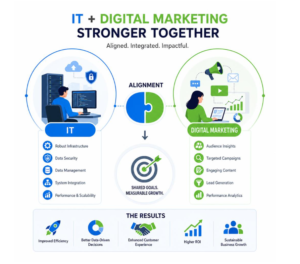
The synergy between IT infrastructure and marketing strategies is no longer a luxury but a necessity. In today’s interconnected business world, marketing relies heavily on technology for data collection, analysis, and campaign execution. A disconnect between these two vital departments can lead to data silos, inefficient workflows, and missed opportunities.
Integrating IT and marketing means ensuring that customer relationship management (CRM) systems, marketing automation platforms, and data analytics tools are not only robust but also seamlessly integrated with the underlying IT infrastructure. This integration allows for a unified view of customer data, enabling more personalized and effective marketing campaigns. For example, a well-integrated system can track a lead’s journey from initial website visit to conversion, providing invaluable insights for optimizing future efforts. We understand the importance of this alignment, especially for High-conversion B2B healthcare marketing.
Workflow automation, powered by IT, plays a crucial role in streamlining marketing operations. Tasks such as email sequencing, lead scoring, and content distribution can be automated, freeing up marketing teams to focus on strategic initiatives rather than manual execution. This efficiency directly impacts the speed and scale at which marketing efforts can be deployed.
Implementing B2B Technology Solutions for Lead Generation

Effective lead generation is the lifeblood of B2B sales. B2B technology solutions provide the tools and strategies to fill the sales pipeline with qualified prospects and accelerate their journey to conversion.
Sales Enablement: Technology solutions empower sales teams with the resources they need to engage prospects effectively. This includes access to up-to-date product information, personalized content libraries, and communication tools that streamline outreach. When sales and marketing are aligned through shared platforms, the handover of leads becomes smoother, and sales representatives are better equipped to address prospect needs. This strategic alignment is a key component of our approach to B2B work.
Pipeline Acceleration: From initial contact to closing a deal, B2B sales cycles can be lengthy. Technology solutions accelerate this process by providing insights into buyer behavior, automating follow-ups, and identifying potential roadblocks. Intent data, as discussed earlier, is particularly powerful here, allowing sales teams to engage prospects when they are most receptive. Tools that track engagement, provide real-time notifications, and offer predictive analytics help shorten the sales cycle and improve conversion rates.
Customer Acquisition: The goal of lead generation is successful customer acquisition. B2B technology solutions optimize this by ensuring that marketing efforts are targeted, sales processes are efficient, and the overall customer experience is positive. This holistic approach, from initial brand awareness to post-sale nurturing, is crucial for building a loyal customer base.
Account-Based Marketing and Intent Data Integration
The precision of Account-Based Marketing (ABM) combined with the foresight of intent data creates a potent strategy for B2B growth. ABM, by its nature, demands a deep understanding of target accounts, and intent data provides the crucial signals needed to execute this strategy effectively.
Predictive Intent: Modern B2B technology solutions go beyond basic intent data collection to offer predictive intent capabilities. This involves using AI and machine learning to analyze vast datasets of online behavior, firmographics, and technographics to forecast which accounts are most likely to buy, and when. This allows marketing and sales teams to proactively engage with high-potential accounts, often before competitors even realize an opportunity exists.
Target Account List Refinement: Intent data helps refine and prioritize target account lists for ABM campaigns. Instead of casting a wide net, businesses can focus their resources on accounts that are actively researching solutions, showing signs of purchase intent, or engaging with competitor content. This ensures that ABM efforts are directed towards the most promising opportunities, maximizing ROI.
Personalized Campaigns: With a clear understanding of an account’s specific needs and interests, thanks to intent data, ABM campaigns can be highly personalized. This means delivering tailored content, customized messaging, and relevant offers that resonate deeply with key decision-makers within the target organization. The result is a more engaging and effective customer journey. Agencies like SyncShow in Cleveland exemplify how specialized B2B digital marketing can leverage these advanced techniques to drive client success.
Key Frameworks for Enterprise Growth
The strategic deployment of B2B technology solutions hinges on robust frameworks that leverage cutting-edge advancements like AI, automation, and data analytics. These elements are not just buzzwords; they are foundational to improving lead quality, optimizing operational efficiency, and delivering measurable ROI for clients.
Leveraging AI, Automation, and Data Analytics
AI Personalization: Artificial intelligence is transforming B2B marketing by enabling hyper-personalization at scale. AI algorithms can analyze vast amounts of customer data to predict preferences, recommend content, and tailor messaging for individual prospects. This level of personalization significantly enhances engagement and conversion rates.
Automated Workflows: Automation streamlines repetitive tasks across marketing and sales, from lead nurturing emails to CRM updates. This frees up human resources to focus on strategic thinking and high-touch interactions. For instance, an AI-powered virtual director can simplify meetings, and automated threat analysis can drastically reduce investigation and response times.
Data Analytics for ROI: Advanced data analytics provides the insights needed to measure campaign performance and optimize strategies. By tracking key metrics and identifying trends, businesses can make data-driven decisions to improve lead quality and maximize return on investment. The ability to trace causality across multiple systems, as seen in advanced platforms, allows for rapid identification of root causes for performance issues, offering a 90-day early warning before significant revenue impact.

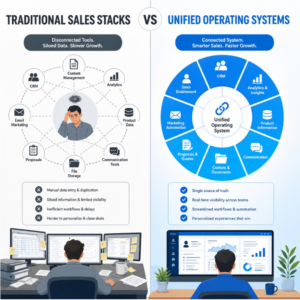
The shift from disparate tools to unified operating systems is a significant trend. Traditional sales stacks often involve numerous disconnected tools, leading to data silos and inefficient workflows. In contrast, unified platforms aim to integrate various functions into a single, cohesive environment. For companies dealing with complex product portfolios, such as those in ingredients or raw materials, a platform like handify positions itself as a “Technical Sales Operating System.” It aims to eliminate disconnected tools by integrating product information management (PIM), AI data management (MDM), sales enablement, and digital sales rooms, emphasizing hyper-contextuality where every module understands what others are doing. This contrasts sharply with traditional approaches where building a client presentation might take half a day due to manual data aggregation.
Measuring the ROI of B2B Technology Solutions
Demonstrating a clear return on investment (ROI) is crucial for any technology adoption. For B2B technology solutions, this means meticulously tracking metrics that directly impact the bottom line.
Customer Acquisition Cost (CAC): By optimizing lead generation and sales processes, B2B tech solutions aim to reduce the cost associated with acquiring a new customer. This includes analyzing the efficiency of marketing channels and sales efforts.
Customer Lifetime Value (CLTV): Effective B2B solutions not only acquire customers but also foster long-term relationships, increasing their lifetime value. This can be achieved through enhanced customer experience, personalized engagement, and proactive support.
Conversion Rates: From website visitors to qualified leads, and from leads to paying customers, improving conversion rates at every stage of the funnel is a primary objective. Technology provides the data and automation to identify bottlenecks and optimize conversion pathways. For specialized sectors like healthcare, understanding these metrics is vital for crafting High-conversion B2B healthcare marketing strategies that deliver tangible results.
Data Privacy and Ethical Marketing Compliance
In an era of increasing data scrutiny, ensuring data privacy, ethical marketing practices, and compliance is paramount for B2B technology solutions. Companies must navigate a complex web of regulations like GDPR, CCPA, and emerging AI governance frameworks.
GDPR Compliance and Data Security: Robust data security measures are fundamental. This includes advanced encryption, secure communication protocols, and comprehensive monitoring systems to detect and mitigate threats. For example, platforms designed for enterprise AI, such as Tytan Technology Inc., emphasize built-in governance, auditability, and PII redaction as default architectural features. They offer cryptographic audit trails for every AI decision, ensuring transparency and accountability, which is critical for regulated industries.
Ethical Marketing Practices: Beyond legal compliance, ethical considerations guide how data is collected, used, and shared. This means transparent communication with prospects about data usage, obtaining proper consent, and avoiding deceptive practices. The focus is on building trust and maintaining a positive brand reputation.
Compliance in Campaigns: Every marketing campaign must adhere to relevant industry standards and legal requirements. This involves ensuring that email marketing is CAN-SPAM compliant, advertising adheres to platform policies, and data handling practices meet privacy regulations. The ability to maintain legal holds and GDPR compliance through built-in deletion capabilities, as seen in advanced AI platforms, showcases the evolving integration of compliance into core technology solutions.
Frequently Asked Questions about B2B Technology Solutions
As businesses increasingly rely on advanced technology, common questions arise regarding implementation, benefits, and best practices. Here, we address some of the most frequent inquiries.
What are the primary benefits of integrating IT and marketing?
Integrating IT and marketing yields several significant benefits for B2B organizations. Firstly, it fosters cross-department collaboration, breaking down traditional silos and ensuring that both teams work towards common goals. This alignment leads to more cohesive strategies and execution. Secondly, it enables unified data access, providing a single source of truth for customer information, campaign performance, and operational metrics. This eliminates data inconsistencies and improves decision-making. Thirdly, it results in streamlined operations through automation and optimized workflows, reducing manual effort and increasing efficiency. This integration enhances the overall customer experience and drives business growth. A comprehensive suite of services often highlights the importance of this integrated approach.
How do modern B2B platforms leverage AI and automation?
Modern B2B platforms are increasingly sophisticated in their use of AI and automation to deliver superior results.
Agentic AI: This refers to AI systems that can autonomously perform tasks, make decisions, and learn from their interactions, often with human oversight. Platforms like Tytan TAO, described as an “Agentic OS for the modern enterprise,” utilize agentic AI to provide persistent memory, autonomous agents, and executive intelligence. Their APEX Agentic AI Platform, for instance, can orchestrate complex workflows in areas like claims processing or supply chain management, reducing manual intervention and accelerating outcomes. Similarly, Sapient Slingshot, an AI Platform for Software Development, embeds specialized AI agents across the entire software development lifecycle to automate tasks, accelerate modernization, and ensure code accuracy.
Automated Workflows: AI and automation drive intelligent workflows that can respond dynamically to events. This includes automated lead scoring, personalized content delivery based on intent signals, and proactive customer support. These workflows reduce operational costs and increase productivity by handling routine tasks efficiently.
Predictive Modeling: AI-powered predictive analytics helps businesses anticipate future trends, identify potential risks, and forecast outcomes. For example, Tytan TAO’s Cortex Enterprise Brain can trace causality across multiple systems in seconds, providing early warnings for potential revenue impacts. This allows B2B companies to make more informed and proactive strategic decisions.
What security standards should B2B companies prioritize?
Prioritizing robust security standards is non-negotiable for B2B companies, especially given the sensitive nature of business data and the increasing regulatory landscape.
Threat Detection and Prevention: Implementing advanced threat detection systems, including intrusion detection/prevention systems (IDS/IPS), endpoint detection and response (EDR), and security information and event management (SIEM) solutions, is critical. These tools help identify and neutralize cyber threats in real-time.
Encryption and Access Controls: Data encryption, both in transit and at rest, is essential to protect sensitive information from unauthorized access. Strong access controls, including multi-factor authentication (MFA) and role-based access control (RBAC), ensure that only authorized personnel can access critical systems and data.
Compliance Frameworks: Adherence to relevant compliance frameworks such as GDPR, ISO 27001, SOC 2, and industry-specific regulations is vital. This demonstrates a commitment to data protection and helps avoid hefty fines and reputational damage. Even financial platforms, like the Capchase Platform which facilitates B2B financing, must integrate robust security and compliance measures, such as PII redaction and audit trails, to protect sensitive financial data. Regular security audits and employee training are also crucial components of a comprehensive security strategy.
Conclusion
The journey through B2B technology solutions reveals a landscape defined by innovation, integration, and strategic foresight. From enhancing lead generation and marketing efforts with ABM and intent data to fortifying operations with managed IT and cloud infrastructure, these solutions are indispensable for businesses aiming for sustained growth in June 2026 and beyond.
The effective alignment of IT and marketing is no longer an aspiration but a fundamental requirement for success. By leveraging AI, automation, and advanced data analytics, B2B companies can not only improve lead quality and optimize ROI but also ensure data privacy and ethical compliance, building trust with their clients. The evolution of B2B technology solutions points towards more unified, intelligent, and flexible systems that adapt to the unique challenges of each enterprise.
As we look to the future, the continuous adoption of advanced B2B technology solutions will be a key differentiator. Companies that embrace these innovations, focusing on strategic partnerships and a holistic approach to their digital ecosystem, will be best positioned to unlock their full potential and achieve unparalleled success. For businesses seeking to navigate this complex environment, exploring comprehensive Digital Marketing Services is a crucial step towards optimizing operations and securing a competitive advantage.