
Tailoring Commercial Insurance Solutions for Complex Projects
Navigating the complexities of large-scale construction projects, especially in dynamic regions like Greater Boston, demands a sophisticated approach to risk management. From the bustling construction sites of Brookline to the intricate infrastructure developments across Massachusetts, project owners and contractors face a myriad of potential liabilities. Crafting an effective commercial insurance strategy is not merely about compliance; it’s about safeguarding investments, ensuring project continuity, and protecting all stakeholders from unforeseen financial burdens. This section delves into how specialized insurance solutions, particularly Owners and Contractors Protective (OCP) liability coverage, are meticulously tailored to address these unique challenges.
The Role of OCP in Commercial Insurance Solutions
Owners and Contractors Protective (OCP) liability coverage is a specialized insurance policy designed to shield project owners (or general contractors acting as owners) from specific liabilities arising from construction activities. This coverage primarily addresses two critical areas: the vicarious liability of the project owner for the acts or omissions of a designated contractor, and the owner’s own liability stemming from their general supervision of the contractor’s operations.
Essentially, while the contractor performs the work, the project owner can still be held indirectly responsible for certain incidents. An OCP policy steps in to cover bodily injury or property damage claims that originate from the independent contractor’s work at the project site. The contractor typically purchases this policy, naming the project owner as the sole insured, providing dedicated protection that is often a contractual requirement. This arrangement ensures that the project owner has a direct line of defense, separate from the contractor’s own insurance. For a more detailed exploration of this crucial coverage, including its benefits and applications, we encourage you to delve deeper into the specifics of Kovalev contractors protective liability insurance.
Key Differences: OCP vs. Commercial General Liability
While both Owners and Contractors Protective (OCP) coverage and Commercial General Liability (CGL) insurance are foundational to construction risk management, they serve distinct purposes and offer different scopes of protection. Understanding these differences is paramount for effective risk transfer and comprehensive coverage.
A standard CGL policy primarily protects the contractor who purchases it, covering them for third-party bodily injury and property damage claims arising from their operations. When a project owner is added to a contractor’s CGL policy as an “additional insured,” they gain some protection, but these limits are shared with the contractor and potentially other additional insureds. This means that a claim against the contractor could deplete the shared limits, leaving less protection for the owner.
In contrast, an OCP policy is project-specific and provides dedicated limits solely for the project owner. This means the policy’s coverage amounts are reserved exclusively for the owner’s protection, ensuring that their defense and indemnity needs are met without being impacted by claims against the contractor. OCP policies are typically written for the duration of a specific project, with the policy period aligning with the project’s start and end dates. This standalone nature, coupled with dedicated limits, offers the project owner primary coverage that is non-contributory, meaning it responds first without seeking contribution from the owner’s other insurance policies.
Here’s a comparison to highlight the key distinctions:
Feature Owners and Contractors Protective (OCP) Policy Commercial General Liability (CGL) Policy with Additional Insured Primary Beneficiary Project Owner (Named Insured) Contractor (Named Insured); Additional Insureds also protected Purchased By Contractor Contractor Coverage Focus Owner’s vicarious liability from contractor’s operations & owner’s general supervision Contractor’s direct liability; may extend to additional insureds Limits of Insurance Dedicated, project-specific limits for the owner Shared limits among named insured and all additional insureds Policy Term Project-specific (matches project duration) Annual (covers all projects/operations during the term) Coverage Nature Primary, non-contributory for the owner Often excess or co-primary for additional insureds Duty to Defend Yes, for the named insured (owner) Yes, for the named insured (contractor) and additional insureds Why Massachusetts Contracts Require Specialized Insurance Solutions
In the competitive landscape of construction across Massachusetts, from Wellesley to Needham and throughout the Greater Boston area, project contracts frequently stipulate specific insurance requirements. These mandates are not arbitrary; they are a direct response to the inherent risks of construction and the legal framework governing liability and risk transfer.
Massachusetts, like many states, has anti-indemnity statutes that can limit the extent to which one party (e.g., a project owner) can be contractually indemnified by another (e.g., a contractor) for their own negligence. In such environments, traditional “hold harmless” agreements may not fully protect project owners. This is where specialized insurance, like OCP coverage, becomes indispensable.
Project owners and general contractors often require OCP policies to ensure they have a direct, dedicated layer of protection against vicarious liability, particularly on public works projects or those involving significant public interaction. By requiring the contractor to purchase an OCP policy, the project owner secures a separate insurance mechanism that provides primary coverage for claims arising from the contractor’s work or the owner’s general supervision, effectively bypassing some of the limitations of anti-indemnity laws. This not only strengthens the owner’s risk transfer strategy but also provides a clear advantage for contractors in securing bids, as it demonstrates a proactive approach to comprehensive risk management and compliance with project-specific requirements.
Protecting Assets with Personal and Business Coverage
While the focus of this guide is on commercial insurance solutions for contractors, it’s crucial to recognize that business and personal assets are often intertwined, especially for small to medium-sized contractors and project owners in communities like Belmont and Natick. A comprehensive risk management strategy extends beyond the job site, ensuring that both your business endeavors and personal wealth are adequately protected. This holistic approach to insurance provides peace of mind, knowing that a significant commercial liability won’t inadvertently jeopardize your personal financial security.
Advantages of OCP for Owners and Contractors

The implementation of an Owners and Contractors Protective (OCP) policy offers distinct advantages for both the project owner and the contractor, fostering a more secure and efficient project environment.
For Project Owners, the benefits are substantial:
- Primary, Dedicated Coverage: OCP provides a separate, dedicated set of insurance limits exclusively for the project owner. Unlike being an additional insured on a CGL policy, these limits are not shared and respond first to covered claims.
- Duty to Defend: The OCP policy typically includes a “duty to defend,” meaning the insurer will appoint and pay for legal counsel to defend the owner against covered lawsuits, regardless of fault.
- Defense Costs Outside Limits: A significant advantage is that defense expenses under OCP policies are often “outside the policy limits.” This means that the costs of defending a claim do not erode the available coverage limits for actual damages, preserving the full limit for potential settlements or judgments.
- Enhanced Risk Control: With dedicated coverage, owners have greater control over how claims are handled, ensuring their interests are prioritized.
For Contractors, OCP also presents compelling advantages:
- Premium Protection: Claims paid under an OCP policy do not affect the contractor’s own Commercial General Liability (CGL) loss history. This means that OCP losses are paid outside the contractor’s insurance program, preventing potential premium hikes on their primary CGL policy.
- Competitive Bidding Advantage: Offering to procure OCP coverage for a project owner can be a significant differentiator in securing bids, demonstrating a commitment to the owner’s protection and a sophisticated understanding of risk management.
- Clearer Risk Allocation: By providing a dedicated policy for the owner, the contractor helps to clearly delineate responsibility and coverage, streamlining the claims process if an incident occurs.
These combined advantages underscore why OCP coverage has become an increasingly vital component of construction contracts in June 2026.
Exclusions and Underwriting Limits in OCP Policies
While OCP coverage offers crucial protection, understand its limitations and the underwriting considerations that shape its scope. An OCP policy is not an all-encompassing shield and typically includes specific exclusions:
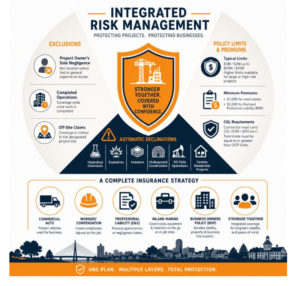
- Project Owner’s Sole Negligence: OCP policies are generally designed to cover the project owner’s vicarious liability arising from the contractor’s work, or the owner’s own acts or omissions in general supervision. They typically do not cover claims arising solely from the project owner’s direct negligence, unless that negligence is specifically tied to their general supervisory duties over the contractor.
- Completed Operations: Coverage usually ceases once the contractor’s work is completed or put to its intended use. Claims arising after this point, commonly known as “completed operations” claims, are typically covered under the contractor’s own CGL policy, not the OCP.
- Off-Site Claims: OCP coverage is strictly limited to the designated project site. Claims occurring off the job site are generally excluded.
Regarding policy limits and premiums, OCP policies are tailored to project scale:
- Typical Limits: Coverage limits commonly range from $1 million per occurrence / $2 million aggregate up to $10 million per occurrence / $10 million aggregate. Higher limits are available for particularly large or high-risk projects.
- Minimum Premiums: In most states, a minimum premium of $1,000 applies for OCP coverage, reflecting the administrative costs and baseline risk assessment. For specialized coverage like Railroad Protective Liability (RRP), the minimum premium is typically higher, often $3,000.
- CGL Requirements: Insurers usually require the contractor maintaining the OCP policy to also carry their own CGL insurance with limits of at least $1 million per occurrence / $2 million aggregate. Furthermore, the contractor’s total limits (CGL plus any Excess or Umbrella policies) must be equal to or greater than the requested OCP limits, ensuring robust underlying coverage.
Automatic Declinations are also common for certain high-risk exposures or project types, which insurers may decline to cover under an OCP policy. These can include projects involving hazardous chemicals, explosives, asbestos, underground construction, oil field operations, or certain types of residential projects, particularly those involving habitational remodeling. Understanding these exclusions and underwriting criteria is vital for ensuring adequate protection and avoiding coverage gaps.
Safeguarding Local Businesses in Greater Boston
For local businesses and contractors operating throughout the Greater Boston area, including Natick, Belmont, and Brookline, a robust insurance strategy extends beyond just OCP coverage. While OCP is critical for specific project liabilities, a truly comprehensive approach integrates various commercial and personal policies to mitigate localized risks and ensure long-term stability.
We recognize that each business faces unique challenges, from the daily commute of commercial vehicles to the specialized tools and equipment used on job sites. Therefore, a complete insurance portfolio often includes:
- Commercial Auto Insurance: Essential for protecting vehicles used for business purposes, whether owned, hired, or non-owned.
- Workers’ Compensation: Legally mandated in most cases, this covers medical expenses and lost wages for employees injured on the job.
- Professional Liability Insurance (E&O): Crucial for contractors offering design-build services or consulting, protecting against claims of negligence or errors in professional services.
- Inland Marine Insurance: Provides coverage for tools, equipment, and materials while in transit or at various job sites.
- Business Owners Policy (BOP): Often a cost-effective way to bundle general liability, commercial property, and business interruption coverage for smaller operations.
By understanding the specific interplay between these policies and the specialized protection offered by OCP, businesses can craft a tailored insurance solution that addresses their unique risk profile. This proactive stance not only protects assets but also reinforces a business’s reputation and financial resilience in the dynamic Massachusetts market.