
Foundations of Personal Finance Planning
At its core, personal finance planning is about taking control of your financial future. It’s a dynamic process that helps individuals and families manage their monetary resources to achieve life goals. Far from being a rigid, one-time task, it’s an ongoing journey that adapts to your evolving circumstances and aspirations. The importance of this process cannot be overstated; it provides a framework for making informed decisions, mitigating risks, and ultimately building lasting wealth.
A fundamental concept in personal finance is understanding your net worth. This isn’t just a figure for the wealthy; it’s a crucial metric for everyone. Your net worth is simply the total value of your assets (what you own) minus your liabilities (what you owe). Assets can include cash, investments, real estate, and valuable personal property. Liabilities encompass credit card debt, mortgages, student loans, and other outstanding obligations. Calculating your net worth provides a snapshot of your financial health at any given moment and serves as a baseline against which to measure progress.
Equally vital is understanding your cash flow – the movement of money into and out of your accounts. Positive cash flow means you have more money coming in than going out, allowing for savings and investments. Negative cash flow, conversely, indicates you’re spending more than you earn, often leading to debt accumulation. Tracking cash flow is the first step toward identifying spending patterns and making necessary adjustments.
Despite its critical importance, a significant portion of the population overlooks formal financial planning. Statistics show that half of Americans don’t have a written financial plan. This lack of a clear roadmap can lead to financial uncertainty and missed opportunities. In April 2026, with an ever-evolving economic landscape, having a well-defined plan is more crucial than ever for achieving financial security.
Assessing Your Current Financial Position
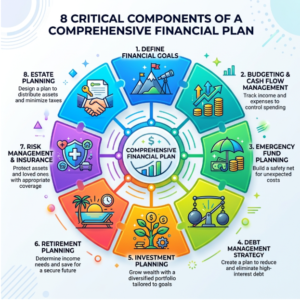
Before you can chart a course for the future, you must accurately understand your present. This involves a thorough assessment of your financial situation.
- Income Sources: Begin by listing all sources of income, including salaries, bonuses, freelance earnings, and any other regular inflows. Understand your net income (after taxes and deductions) to get a realistic picture of disposable funds.
- Expense Tracking: This is where many people gain significant insights. For at least a month, meticulously track every dollar you spend. Use a spreadsheet, a budgeting app, or even a simple notebook. Categorize expenses into fixed (e.g., rent, loan payments) and variable (e.g., groceries, entertainment). This exercise reveals exactly where your money is going and highlights areas for potential savings.
- Debt-to-Income Ratio: Calculate your debt-to-income ratio by dividing your total monthly debt payments by your gross monthly income. Lenders use this ratio to assess your ability to manage debt, and a high ratio can indicate financial strain.
- Financial Health Baseline: By compiling your net worth, cash flow, and debt-to-income ratio, you establish a comprehensive baseline. This baseline is your starting point, enabling you to set realistic goals and monitor your progress over time. It helps you be unbiased in assessing your finances, which is a best practice for effective planning.
Setting Goals in Personal Finance Planning
With a clear understanding of your current financial standing, the next step is to define your aspirations. Effective financial planning is always goal-driven. Without specific goals, your financial efforts lack direction.
- Short-term Objectives: These are goals you aim to achieve within one to three years. Examples include building an emergency fund, paying off high-interest credit card debt, saving for a vacation, or making a significant purchase like a new appliance.
- Mid-term Milestones: Typically spanning three to five years, mid-term goals might include saving for a home down payment, funding a child’s education for a few years, or starting a small business.
- Long-term Dreams: These are your ambitions for five years or more into the future. Retirement planning, comprehensive college savings, purchasing a dream home, or leaving a legacy are common long-term financial goals.
Specificity is key when setting goals. Instead of “save more money,” aim for “save $10,000 for a home down payment by April 2029.” Assigning clear time horizons and specific dollar figures makes your goals measurable and achievable. Attaching a ‘why’ to each goal, such as “to feel secure in retirement” or “to provide my children with opportunities,” enhances motivation and commitment. This structured approach ensures your financial plan aligns with your deepest desires and provides a clear path forward.
Strategic Budgeting and Debt Management
Budgeting is often seen as restrictive, but it’s actually an empowering tool. It’s not about cutting out all enjoyment; it’s about allocating your money intentionally to support your goals. A well-crafted budget serves as your financial blueprint, ensuring you spend less than you earn and direct funds towards savings and debt reduction.
Popular budgeting methods offer different approaches to suit various preferences:
- The 50/30/20 rule suggests allocating 50% of your after-tax income to needs (housing, utilities, groceries), 30% to wants (dining out, entertainment, hobbies), and 20% to savings and debt repayment. This method offers a balanced and flexible framework.
- Zero-based budgeting requires you to assign every dollar of your income to a specific category (expenses, savings, debt) until your income minus your allocations equals zero. This method provides meticulous control and ensures no money is unaccounted for.
- The 60/30/10+15 guideline is another structured approach, allocating 60% to essentials, 30% to non-essentials, 10% to short-term goals/emergency savings, and an additional 15% specifically for retirement.
Regardless of the method, the core principle is to differentiate between fixed vs. discretionary spending. Fixed expenses are generally non-negotiable and consistent (rent, loan payments), while discretionary spending is flexible and can be adjusted (entertainment, dining out). Identifying areas where discretionary spending can be trimmed is often the quickest way to free up funds for savings or debt repayment. Many individuals find that leveraging Simplified personal finance tools can significantly streamline the budgeting process, making it less daunting and more effective.
Effective Debt Repayment Strategies

Debt, particularly high-interest consumer debt, can be a major impediment to financial progress. The average American household carries a debt of over $104,000, including mortgages and credit cards, highlighting the widespread challenge. Effectively managing and paying off debt is a cornerstone of personal financial planning.
Two popular strategies for tackling debt are:
- The Snowball method: This involves paying off your smallest debt first, while making minimum payments on all other debts. Once the smallest debt is paid, you roll the payment amount into the next smallest debt. This method provides psychological wins and momentum, which can be highly motivating.
- The Avalanche method: With this strategy, you prioritize paying off the debt with the highest interest rate first, while making minimum payments on others. Once the highest-interest debt is cleared, you move to the next highest. This method saves you the most money on interest over time.
Prioritizing high-interest consumer debt, such as credit card balances (which can range from 14% to 25% or more), is generally advisable. The interest saved can be substantial and can be redirected towards other financial goals. Paying down debt also positively impacts your credit score, which in turn can lead to better interest rates on future loans, like mortgages or car loans.
Establishing and Maintaining an Emergency Fund
One of the most critical components of a robust financial plan is a well-funded emergency reserve. An emergency fund acts as a financial safety net, protecting you from unexpected expenses like job loss, medical emergencies, or car repairs without derailing your long-term goals or forcing you into high-interest debt.
The general guideline is to save 3-6 months of essential living expenses. This amount provides a buffer against most unforeseen circumstances. Just over half of all adults have three months of emergency savings put aside, underscoring the need for greater emphasis on this crucial step.
Key characteristics of an effective emergency fund:
- Liquidity: The funds must be easily accessible. High-yield savings accounts or money market accounts are ideal, as they offer better returns than traditional checking accounts while keeping your money readily available.
- Automation: Set up automatic transfers from your checking account to your emergency fund account each payday. Even starting with a small amount, like $100 a month, can build significant savings over time.
- Defined Usage: Clearly define what constitutes an “emergency.” This fund should only be tapped for unexpected, unavoidable, and urgent expenses, not for discretionary spending or wants.
Building and maintaining this fund provides immense peace of mind and is a foundational step towards financial resilience.
Building Wealth through Saving and Investing
Saving and investing are distinct but complementary activities, each playing a vital role in achieving financial goals. Saving typically involves setting aside money in low-risk, easily accessible accounts for short-term objectives (e.g., an emergency fund, a vacation). Investing, on the other hand, involves putting money into assets like stocks, bonds, or real estate with the expectation of generating long-term growth and returns, often for goals five years or more away.
The power of compound interest is a central concept in investing. It refers to earning returns not only on your initial investment but also on the accumulated interest from previous periods. The earlier you start investing, the more time your money has to grow exponentially, demonstrating the significant impact of the time value of money.
Key investment vehicles for long-term wealth building include:
- 401(k) plans: These are employer-sponsored retirement savings plans that allow employees to contribute a portion of their pre-tax salary. Contributions and earnings grow tax-deferred until retirement.
- IRAs (Individual Retirement Accounts): These are personal retirement accounts that offer tax advantages. Traditional IRAs allow pre-tax contributions to grow tax-deferred, while Roth IRAs allow after-tax contributions to grow tax-free, with qualified withdrawals also being tax-free in retirement.
- Employer matching: Many employers offer to match a percentage of employee contributions to 401(k) plans. This is essentially free money and should be prioritized as it significantly boosts your retirement savings.
For short-term goals, accessible low-risk accounts like high-yield savings accounts or Certificates of Deposit (CDs) are more appropriate, as they protect your capital from market volatility. For long-term goals, investing in diverse portfolios through 401(k)s, IRAs, and taxable brokerage accounts leverages the power of the market for substantial growth.
The Evolution of Personal Finance Planning Through Life Stages
Personal finance planning is not static; it’s a dynamic process that evolves significantly across different life stages. What’s appropriate for a college student will differ vastly from someone approaching retirement.
- Early career: Focus typically includes paying off student loans, building an emergency fund, establishing good credit, and starting retirement savings (especially to capture employer matches).
- Family expansion: As individuals get married, buy homes, and have children, financial priorities shift to include larger home down payments, college savings, increased insurance needs, and estate planning considerations like wills and guardianship.
- Mid-life peak earnings: This stage often allows for accelerated debt repayment, maximizing retirement contributions, diversifying investments, and potentially exploring advanced tax strategies.
- Pre-retirement: The focus shifts to fine-tuning retirement income strategies, potentially making catch-up contributions to retirement accounts, planning for healthcare costs in retirement, and solidifying estate plans.
- Legacy planning: For those in or near retirement, the emphasis may turn to wealth preservation, efficient distribution of assets, and philanthropic endeavors.
Each life stage presents unique financial challenges and opportunities, requiring regular review and adjustment of your financial plan to stay aligned with your evolving needs and goals.
Diversification and Risk Tolerance
A core principle of sound investing is diversification. This means spreading your investments across various asset classes (e.g., stocks, bonds, real estate, commodities) and within those classes (e.g., different industries, company sizes, geographies). The goal is to reduce overall portfolio risk, as a downturn in one area may be offset by gains in another.
Understanding your risk tolerance is crucial. This refers to your willingness and ability to take on investment risk. A younger investor with a long time horizon might have a higher risk tolerance and can afford to invest more aggressively, while someone nearing retirement might prefer a more conservative approach to protect their capital.
Asset allocation is the process of deciding how to divide an investment portfolio among different asset categories based on your risk tolerance, financial goals, and time horizon. Regularly rebalancing your portfolio ensures it stays aligned with your target asset allocation. For example, if stocks have performed exceptionally well, their proportion in your portfolio might grow beyond your target. Rebalancing would involve selling some stocks and buying other assets to bring the portfolio back into balance. This proactive management helps maintain a portfolio that acts as a powerful “engine” for long-term growth while managing potential downsides.
Risk Management and Long-Term Security
Financial planning extends beyond just accumulating wealth; it also involves protecting it. Risk management is the process of identifying potential financial threats and implementing strategies to mitigate their impact. Insurance is a primary tool for this.
Key types of insurance essential for a comprehensive financial plan include:
- Health insurance: Critical for covering medical expenses, which can be a significant financial burden.
- Disability insurance: This is often overlooked but incredibly important. A disabling condition will push one in four of today’s 20-year-olds out of work for at least a year before they’re retired. Disability insurance replaces a portion of your income if you’re unable to work due to illness or injury.
- Life insurance: Provides financial protection for your loved ones in the event of your death, ensuring they can cover expenses and maintain their lifestyle.
- Auto and homeowners’/renters’ insurance: Protects your assets (vehicles, home, personal belongings) from damage, theft, or liability claims.
Reviewing your insurance coverage regularly ensures you’re adequately protected without overpaying for coverage you don’t need. Consulting with a professional can help assess your specific needs and find the right policies. For those seeking a deeper understanding of how these protections integrate into a broader financial strategy, exploring Personal financial clarity tools can offer valuable insights.
Tax Planning and Optimization

Taxes are an unavoidable part of financial life, but smart tax planning can significantly impact your overall financial health. The goal is not to avoid taxes illegally, but to minimize your tax liability through legitimate strategies and take advantage of available deductions, credits, and tax-advantaged accounts.
- HSAs (Health Savings Accounts): These accounts offer a unique triple-tax advantage: contributions are tax-deductible, earnings grow tax-free, and qualified withdrawals for medical expenses are tax-free. For those with high-deductible health plans, HSAs are a powerful tool for both healthcare savings and retirement planning.
- Tax-loss harvesting: This strategy involves selling investments at a loss to offset capital gains and potentially a limited amount of ordinary income, reducing your tax bill.
- Deductions and Credits: Understanding and utilizing eligible tax deductions (e.g., for student loan interest, traditional IRA contributions) and tax credits (e.g., child tax credit, education credits) can directly reduce your taxable income or the amount of tax you owe.
- 2026 Contribution Limits: Staying informed about annual contribution limits for retirement accounts (e.g., 401(k)s, IRAs) and HSAs is crucial for maximizing tax-advantaged savings. For April 2026, for example, 401(k)/403(b) limits might be around $24,500, with higher catch-up contributions for those aged 50 and over.
Effective tax planning requires ongoing attention and can be complex, often benefiting from professional advice.
Estate Planning and Legacy
Estate planning is not just for the wealthy or the elderly; it’s a vital component of personal financial planning for everyone. It involves making decisions about how your assets will be managed and distributed after your death or if you become incapacitated.
Key elements of estate planning include:
- Wills: A legal document outlining how your assets should be distributed and who will be the guardian of minor children.
- Trusts: Legal arrangements that hold assets for the benefit of designated beneficiaries, offering more control over distribution and potentially tax advantages.
- Power of attorney: Designates someone to make financial or healthcare decisions on your behalf if you’re unable to.
- Beneficiary designations: Crucial for retirement accounts and life insurance policies, as these typically bypass your will and go directly to the named beneficiaries.
- Guardianship: Establishing legal guardians for minor children is a paramount concern for parents.
Even for younger individuals without significant assets, having basic documents like a will and power of attorney ensures your wishes are respected and reduces potential burden on your family during difficult times. Collaborating with an estate attorney can ensure your plan is legally sound and aligns with your intentions.
Professional Guidance and Career Paths
A personal financial plan is not a “set it and forget it” document. It requires regular attention and adjustment. An annual plan review is a best practice, allowing you to reassess your goals, track progress, and make necessary modifications. Major life event adjustments, such as a new job, marriage, birth of a child, divorce, or significant inheritance, also necessitate a review of your financial plan. Similarly, changes in market conditions or economic forecasts might prompt adjustments to your investment strategy.
While many aspects of financial planning can be managed independently, there are times when working with a financial advisor or professional is highly beneficial. Advisors can provide objective guidance, help navigate complex financial situations, and offer specialized expertise in areas like investment management, tax planning, or estate planning. When choosing an advisor, it’s often recommended to seek those with a fiduciary duty, meaning they are legally obligated to act in your best interest. The CERTIFIED FINANCIAL PLANNER™ (CFP®) certification is a widely recognized standard for financial planning professionals.
For those interested in a career in this field, educational programs like a Bachelor of Science in Personal Financial Planning, such as the one offered by Mizzou, prepare students for diverse career outcomes. These can include roles in financial planning, insurance, investments, banking, financial counseling, and more. Such programs often meet the educational requirements for the national CFP® exam, addressing the growing demand for qualified planners.
Frequently Asked Questions about Financial Planning
When should I consider working with a financial advisor?
You might consider engaging a financial advisor when facing complex tax situations, undergoing significant life changes (like marriage, divorce, inheritance, or starting a business), or if you have substantial wealth management needs that go beyond basic budgeting and saving. Advisors can also be valuable if you feel overwhelmed by investment decisions or simply want an objective second opinion on your financial strategy. Look for advisors who operate under a fiduciary requirement, ensuring they prioritize your best interests.
What free tools and resources are available for financial planning?
A wealth of free resources can help you manage your finances. Online savings calculators can project the growth of your money, while Required Minimum Distribution (RMD) tools help calculate mandatory withdrawals from retirement accounts. The Social Security Administration provides a Social Security planner to estimate your future benefits. Furthermore, many reputable financial institutions and government websites (like Investor.gov) offer free online financial literacy courses, budgeting templates, and investment professional check tools to verify credentials.
How often should I review and adjust my financial plan?
Ideally, you should conduct an annual check-in to review your financial plan. This allows you to assess progress towards your goals, evaluate your spending habits, and make any necessary adjustments based on your current income and expenses. Beyond annual reviews, it’s crucial to reassess your plan after any major life events (e.g., new job, marriage, birth of a child, divorce, significant inheritance), career changes (promotion, job loss), or significant market shifts. These events can alter your financial landscape and require a goal reassessment to ensure your plan remains relevant and effective.
Conclusion
In April 2026, embracing personal finance planning is more than a recommendation; it’s a pathway to empowerment. We’ve explored the foundational elements, from assessing your current financial position and setting clear goals to mastering budgeting and strategically managing debt. We’ve delved into the powerful engines of wealth building—saving and investing—and underscored the critical role of risk management and long-term security through insurance, tax planning, and estate preparation.
The journey of personal finance is unique for everyone, evolving through different life stages and adapting to unforeseen circumstances. The key to success lies in consistency and proactive management. By regularly reviewing and adjusting your plan, seeking professional guidance when needed, and leveraging Smart finance solutions, you can build financial confidence and achieve long-term success. Financial planning is not just about accumulating money; it’s about creating the freedom and security to live the life you envision, ensuring wealth preservation and a resilient financial future for you and your loved ones.