
Mastering Retirement and Wealth Management: The Solution
The good news is that achieving a secure and comfortable retirement is entirely within reach with proactive planning and strategic wealth management. We believe in empowering our clients to create a Lifetime Wealth Blueprint that serves as their personal guide to financial independence. This blueprint goes beyond simple savings; it’s about crafting a future where your finances support your desired lifestyle, even amidst life’s uncertainties.
Our approach often involves helping you establish a “personal pension-like paycheck” from your accumulated assets, providing predictable income streams. We also focus on volatility-managed investing, designed to protect your hard-earned savings from market downturns while still allowing for growth. Effective Retirement Planning is an ongoing process, not a one-time event, and it requires careful consideration of various financial components.
Assessing Income Needs with Retirement and Wealth Management
One of the foundational steps in preparing for retirement is accurately estimating how much income you will need. The common wisdom suggests aiming to replace 70% to 90% of your annual pre-retirement income through a combination of savings and Social Security. However, this is a general guideline. Your actual needs will depend heavily on your desired lifestyle in retirement. Will you travel extensively, pursue new hobbies, or downsize your home?
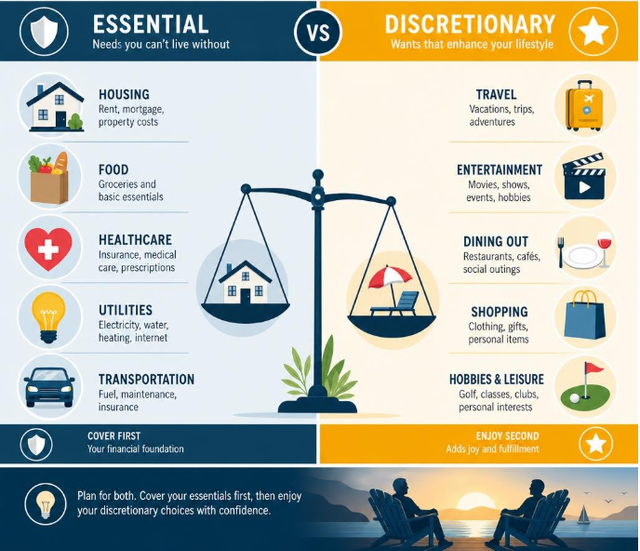
To get a clearer picture, we encourage a detailed assessment of your expenses. Categorize them into “essential” (housing, food, healthcare, utilities) and “discretionary” (travel, entertainment, dining out). Many expenses, like commuting costs and work-related attire, may decrease, while others, particularly healthcare and leisure, might increase. Our Need, Wants, Wishes Calculator can be an invaluable tool for this exercise, helping you quantify your aspirations and align them with your financial reality. This granular approach to Retirement Income Planning ensures your strategy is tailored to your unique vision.
Mitigating Volatility in Retirement and Wealth Management
Market volatility is a constant in the investment world, and it can be particularly concerning as you approach and enter retirement. The “sequence of returns risk” highlights how poor market performance early in retirement can significantly impact the longevity of your savings. To counter this, a well-diversified portfolio and a strategic withdrawal plan are crucial. Many financial professionals discuss the “4% rule” as a starting point for annual withdrawals, though this should be adapted to individual circumstances and market conditions.
Our goal is to help you build a resilient portfolio designed for Securing Lifetime Retirement Income, focusing on strategies that manage risk without sacrificing necessary growth. As of June 2026, most individuals must begin taking Required Minimum Distributions (RMDs) from their traditional retirement accounts at age 73. Understanding these rules and planning for their tax implications is vital. For detailed guidance on tax matters related to retirement, consulting the Internal Revenue Service website is always recommended.
Navigating Healthcare, Medicare, and Medigap
Healthcare costs in retirement are a significant concern for many, and they often become one of the largest expenses. Understanding your options and enrolling in the right programs at the right time is paramount.
Medicare is the federal health insurance program for individuals aged 65 or older. Generally, you become eligible for Medicare at age 65. The initial enrollment period typically begins three months before your 65th birthday, includes your birthday month, and extends three months after. Missing this window without other creditable coverage can lead to lifelong penalties for Part B. For comprehensive information and to explore your options, visiting the official Medicare website is essential.
Medigap, or Medicare Supplement Insurance, is private insurance that helps cover some of the out-of-pocket costs that Medicare doesn’t, such as deductibles, copayments, and coinsurance. The best time to enroll in Medigap is during your 6-month Medigap Open Enrollment Period, which starts the month you turn 65 and are enrolled in Medicare Part B. During this period, insurers cannot deny you coverage or charge you more due to pre-existing health conditions.
Health Savings Accounts (HSAs) can be a powerful tool for healthcare savings. For 2025, the limits for HSAs are $4,300 for self-only coverage and $8,550 for family coverage, plus a $1,000 catch-up contribution if you’re 55 or older and not yet enrolled in Medicare. These accounts offer a triple tax advantage: tax-deductible contributions, tax-free growth, and tax-free withdrawals for qualified medical expenses. It is important to note that once you enroll in Medicare, you can no longer contribute to an HSA. Therefore, maximizing your HSA contributions in the years leading up to age 65 is a highly effective strategy. Additionally, if you have an employer-sponsored High Deductible Health Plan (HDHP), your employer may also contribute to your HSA, which further boosts your savings. Planning the transition from active HSA contributions to Medicare enrollment requires careful timing to avoid tax penalties, making it a key component of your overall healthcare retirement strategy.
Optimizing Social Security and Employer Benefits

Social Security will likely be a cornerstone of your retirement income, but the age at which you claim benefits can dramatically impact your monthly payout. The earliest you can claim is age 62, but doing so results in a permanently reduced benefit. Your full retirement age (FRA) depends on your birth year. For those born between 1943 and 1954, it’s 66. For those born in 1960 or later, it’s 67. Delaying your claim beyond your FRA, up to age 70, can significantly increase your monthly benefit. For example, delaying from age 67 to 70 can result in an additional 24% in monthly benefits for life. We recommend exploring the official Social Security website for personalized estimates and detailed information.
Employer-sponsored retirement plans, such as 401(k)s, 403(b)s, and 457 plans, are critical components of your savings strategy. Maximizing your contributions, especially to receive any employer match, is essentially free money. For 2025, the contribution limit for these plans is $23,500. If you’re age 50 or older, you can make an additional “catch-up” contribution of $7,500, bringing your total potential contribution to $31,000. IRA limits for 2024 are $7,000 per person, with a $1,000 catch-up for those age 50 and older. These limits are subject to change annually, so staying informed is key. The Department of Labor provides an excellent Retirement Toolkit that offers a wealth of information on these and other employer benefits. Furthermore, understanding the difference between traditional and Roth contributions within these employer plans can significantly impact your tax liability in retirement. Traditional contributions lower your current taxable income, but withdrawals are taxed as ordinary income. Roth contributions, made with after-tax dollars, allow for tax-free withdrawals in retirement. Balancing these two types of accounts can give you greater tax flexibility when you begin drawing down your assets.
Managing Debt and Estate Planning for Peace of Mind
 Entering retirement free of debt is an ideal scenario, as it significantly reduces your fixed expenses and financial stress. Prioritizing debt repayment, especially high-interest consumer debt like credit cards, before retirement is a smart move. Even carrying a mortgage into retirement requires careful consideration. While some opt to pay it off, others may choose to retain it if their cash flow is robust and investment returns exceed the mortgage interest rate. The decision hinges on your overall financial picture and risk tolerance.
Beyond debt, comprehensive estate planning provides invaluable peace of mind. This involves creating or updating your will, establishing powers of attorney (for both financial and healthcare decisions), and ensuring your beneficiary designations are current on all retirement accounts and insurance policies. These documents ensure your wishes are honored and can prevent unnecessary legal complications and delays for your loved ones. Regularly reviewing these plans, especially after significant life events, is crucial. Taking these steps allows you to Reimagine Your Retirement with confidence, knowing your legacy is secure.
The Value of Professional Financial Advice
The complexities of retirement planning—from investment strategies and tax implications to healthcare choices and estate planning—can be daunting. This is where the expertise of a certified financial planner becomes invaluable. We offer personalized strategies tailored to your unique circumstances and goals, helping you navigate these intricate decisions. A professional advisor can provide objective guidance, help you stay on track, and adapt your plan as your life evolves.
Working with a financial planner means having a dedicated partner who can clarify your options, optimize your resources, and provide reassurance throughout your retirement journey. We invite you to explore our FAQs to learn more about our process and philosophy. If you’re ready to take the next step towards a secure retirement, we welcome you to learn more about Becoming a Client and Contact us to schedule a consultation.
Your Preparing for Retirement Checklist: Actionable Steps
Preparing for retirement is a marathon, not a sprint, but it culminates in a series of critical, actionable steps. This preparing for retirement checklist provides a chronological framework to ensure you cover all bases, fostering financial peace of mind as you transition into this exciting new chapter. To complement this checklist, utilizing a comprehensive Simple Retirement Roadmap can help you visualize the entire journey and keep your long-term financial goals aligned with your daily savings habits.
Here’s a summary of immediate pre-retirement actions to consider:

- 10+ Years Out:
- Maximize Savings: Consistently contribute to your 401(k), IRA, and other investment accounts, taking full advantage of employer matches and catch-up contributions if you’re 50+.
- Review Your Plan: Regularly assess your progress towards your retirement goals and adjust your savings rate or investment strategy as needed.
- Estimate Needs: Use retirement calculators to project your future income needs and assess potential shortfalls.
- 5 Years Out:
- Debt Reduction: Aggressively pay down high-interest debt. Aim to be mortgage-free, or have a clear plan for managing it, by retirement.
- Healthcare Planning: Research Medicare options, Medigap policies, and long-term care insurance. Understand potential out-of-pocket costs.
- Social Security Strategy: Explore various claiming ages (62, FRA, 70) and understand how each impacts your monthly benefit.
- Budget Refinement: Create a detailed retirement budget, accounting for changes in expenses and potential new leisure activities.
- 1-2 Years Out:
- Consult a Financial Advisor: Work with a professional to review your entire financial picture, optimize your investment portfolio for retirement income, and create a withdrawal strategy.
- Review Employer Benefits: Understand your pension options, 401(k) rollover choices, and retiree health benefits.
- Estate Planning Update: Ensure your will, powers of attorney, and beneficiary designations are current and reflect your wishes.
- Practice Retirement Budget: Live on your projected retirement income for a few months to identify any gaps or areas for adjustment.
- 6 Months Out:
- Medicare Enrollment: Enroll in Medicare Parts A and B, and consider Part D and Medigap, during your initial enrollment period to avoid penalties.
- Social Security Application: If you’ve decided on your claiming age, begin the application process.
- Inform Employer: Officially notify your employer of your retirement date.
- 1-3 Months Out:
- Finalize Rollovers: Initiate rollovers of employer retirement plans to an IRA or other suitable accounts.
- Update Banking: Set up direct deposit for Social Security and pension payments.
- Review Insurance: Confirm all necessary insurance coverages (health, home, auto, umbrella) are in place for retirement.
By diligently following these steps, you empower yourself to navigate the complexities of retirement with clarity and confidence. Your financial future is a reflection of the choices you make today.