
The landscape of data sanitization has dramatically shifted since the mid-1990s. For many years, the Department of Defense (DoD) 5220.22-M standard was synonymous with secure data wiping, widely recognized even outside military circles. This standard, formally part of the National Industrial Security Program Operating Manual (NISPOM), first appeared in 1995. At the time, it provided a robust method for overwriting data on magnetic media, primarily hard disk drives (HDDs) and floppy disks, which were the predominant storage technologies.
The core of the DoD 5220.22-M method involved multiple passes of overwriting. The initial “short wipe” typically consisted of three passes: writing a character (e.g., zeros), then its complement (e.g., ones), and finally a random character, with a verification pass after the final overwrite. An extended version, often referred to as DoD 5220.22-M(E) from a 2001 memo, increased this to seven passes, essentially running the original three-pass method twice with an additional pass in between. The intent was to render residual data unrecoverable by commercially available means, addressing concerns about data remanence on magnetic platters.
However, the technological world has advanced significantly since 1995, a time before the widespread adoption of smartphones and flash-based storage. The very foundation of DoD 5220.22-M, designed for legacy media, began to show its limitations.
The Obsolescence of the Three-Pass Wipe
Despite its historical prominence, the DoD 5220.22-M standard is no longer an official DoD requirement for media sanitization in 2026. In fact, the three-pass method was removed from official DoD guidance in a 2001 memo and has not been specified for overwriting hard drives since at least 2006. Notably, the 1995 NISPOM provision never permitted this sanitization method for Top Secret media, indicating its inherent limitations even in its prime.
The reasons for its obsolescence are multifaceted. Modern hard drives with higher areal densities make data recovery from a single overwrite exceedingly difficult, if not impossible, even with advanced laboratory techniques. Research has shown that a single overwrite pass is often sufficient for modern HDDs, making multiple passes redundant and resource-intensive for most data. The idea that multiple overwrites are necessary to completely obscure data was largely based on older magnetic recording technologies and theoretical data recovery methods that are impractical or ineffective today. As noted by experts at IT-Harvest, continuing to use the three-pass method can be a waste of time and money, and organizations should reevaluate its necessity for data erasure. For those managing complex IT environments, understanding these shifts is crucial.
Furthermore, the DoD 5220.22-M method is entirely unsuitable for solid-state drives (SSDs) and other flash-based storage. SSDs operate fundamentally differently from HDDs, utilizing integrated circuits and wear-leveling algorithms that distribute data across the drive. Overwriting specific sectors on an SSD does not guarantee that the original data blocks are overwritten due to the flash translation layer and inaccessible areas. This limitation is a significant drawback in modern enterprise IT, where SSDs are now ubiquitous.
NIST SP 800-88: The Modern Gold Standard
Recognizing the evolving technological landscape and the shortcomings of older methods, the U.S. government, including the DoD, has largely transitioned to the guidelines outlined in NIST Special Publication 800-88, “Guidelines for Media Sanitization.” Originally issued in 2006 and comprehensively revised in December 2014, NIST SP 800-88 provides a more comprehensive and technology-agnostic framework for data sanitization.
NIST SP 800-88 defines three primary categories of media sanitization:
- Clear: This method applies logical techniques to sanitize data in all user-addressable storage locations, rendering data unrecoverable by keyboard or disk-level techniques. For HDDs, this typically involves overwriting with a single character (e.g., zeros). For SSDs, it often means using the drive’s built-in “Sanitize” command.
- Purge: A more rigorous method that renders data unrecoverable even with advanced laboratory techniques. This includes physical or logical techniques that prevent data recovery. For HDDs, degaussing (if effective for the media) or multiple overwrites (though NIST often deems one sufficient for modern drives) could fall under this. For SSDs, cryptographic erase (CE) or the use of the drive’s secure erase command is typically recommended.
- Destroy: This is the ultimate form of sanitization, rendering data unrecoverable by any means and preventing the media from being reused. This involves physical destruction methods like shredding, disintegration, pulverization, or incineration.
The DoD now mandates that federal agencies and contractors use NIST SP 800-88 for media sanitization. The NISPOM rule, which became effective as a federal regulation in 2021, replaced previous DoD policy but does not define specific data sanitization methods. Instead, it defers to current government standards, which primarily point to NIST SP 800-88. This shift underscores that the DoD 5220.22-M is no longer the best or most effective data wiping standard for modern enterprise IT.
For even newer storage technologies and to address gaps in NIST SP 800-88, particularly concerning high-density NVMes and the complexities of modern flash storage, the IEEE 2883 standard, “IEEE Standard for Sanitizing Storage,” was published in August 2022. While NIST SP 800-88 provides excellent guidelines, IEEE 2883 offers more detailed, prescriptive requirements and specifications for sanitizing various storage types, including the intricacies of solid-state media. Adoption of IEEE 2883 is still in its early stages but represents the cutting edge of data sanitization standards.
Here’s a simplified comparison of these standards:
Feature/Standard DoD 5220.22-M (Legacy) NIST SP 800-88 (Current Go-To) IEEE 2883 (Emerging, Detailed) Origin/Year 1995 (NISPOM); 2001 (7-pass memo) 2006; Rev. 1 in 2014 2022 Primary Method Overwriting (3 or 7 passes) Clear, Purge, Destroy Prescriptive methods for various media Target Media Magnetic (HDDs, floppy disks) All media types (HDDs, SSDs, mobile, etc.) All media types, with focus on modern high-density storage Effectiveness Outdated for modern HDDs; ineffective for SSDs Highly effective for diverse media; single overwrite often sufficient for HDDs Advanced, detailed, and highly effective for modern storage Current DoD Status Not an official requirement since 2006; obsolete Mandated for federal agencies/contractors Adoption in early stages; complements NIST SP 800-88 Limitations Resource-intensive; unsuitable for SSDs General guidelines; less prescriptive for new tech Still gaining widespread adoption Verification Verification pass after final overwrite Emphasizes verification for all methods Detailed verification procedures Complexity Simple overwrite patterns Risk-based approach, method selection based on sensitivity Highly technical, detailed specifications Hazardous Materials Logistics in Modern Data Destruction
Beyond the digital realm of data wiping, the physical disposal of IT assets presents significant challenges, particularly concerning hazardous materials. The devices we rely on daily, from laptops to servers, contain various components that can be harmful to the environment and human health if not managed correctly. This is where robust hazardous materials logistics management becomes indispensable, especially when dealing with the secure disposal of decommissioned IT assets from sensitive environments.
Electronic waste, or e-waste, often contains heavy metals like lead, mercury, cadmium, and beryllium, as well as flame retardants and other toxic substances. Lithium-ion batteries, prevalent in modern devices, pose fire risks if damaged or improperly handled during transport and processing. Ensuring the safe and compliant movement of these materials from their point of origin to a certified destruction or recycling facility is a complex undertaking.
Regulatory Frameworks for Hazardous Materials Logistics
The transportation and disposal of hazardous materials are governed by stringent regulatory frameworks designed to protect public health and the environment. In the United States, the Environmental Protection Agency (EPA) and the Department of Transportation (DOT) establish comprehensive guidelines. The EPA’s Resource Conservation and Recovery Act (RCRA) dictates how hazardous waste must be managed from “cradle to grave,” including proper identification, labeling, storage, transport, and disposal. DOT regulations, outlined in 49 CFR, focus on the safe transportation of hazardous materials, specifying requirements for packaging, hazard communication, shipping papers (like hazardous waste manifests), and vehicle placarding.
For international movements of e-waste, agreements such as the Basel Convention on the Control of Transboundary Movements of Hazardous Wastes and Their Disposal play a critical role, aiming to prevent the transfer of hazardous waste from developed to less developed countries without proper environmental controls. Adhering to these diverse and often overlapping regulations is paramount for any organization involved in data destruction and IT asset disposition. This is especially true when considering the comprehensive Hazardous logistics for DOD data destruction, where security and compliance are of the utmost importance.
Best Practices for Hazardous Materials Logistics and Chain of Custody
Effective hazardous materials logistics for data destruction goes beyond mere compliance; it’s about establishing a secure, transparent, and environmentally responsible process. Key best practices include:
- Secure Transit: Utilizing specialized transportation vehicles designed for hazardous materials, equipped with secure locking mechanisms and environmental controls to prevent spills or damage during transit.
- GPS Tracking: Implementing real-time GPS tracking for all shipments to monitor their location and ensure they follow approved routes, providing an additional layer of security and accountability.
- Sealed Containers: Packaging e-waste in sealed, appropriately labeled containers that meet DOT specifications, preventing leakage or exposure of hazardous substances.
- Audit Trails and Chain of Custody: Maintaining meticulous records for every step of the process, from asset collection to final destruction. A robust chain of custody ensures accountability and provides an indisputable record for compliance audits. This includes detailed manifests, weigh tickets, and certificates of destruction.
- Environmental Safety Protocols: Ensuring that all personnel involved in handling hazardous materials are thoroughly trained in safety protocols, emergency response procedures, and the proper use of personal protective equipment.
- Risk Mitigation: Conducting thorough risk assessments for all aspects of the logistics process, identifying potential hazards, and implementing controls to minimize risks of accidents, spills, or unauthorized access.
By integrating these best practices, organizations can confidently manage the complexities of hazardous materials logistics, ensuring that data destruction is not only secure but also environmentally sound.
Technical Challenges of Solid-State and Magnetic Media
The choice of data sanitization method is heavily dependent on the type of storage media. What works effectively for a traditional hard disk drive (HDD) often fails for a solid-state drive (SSD), and vice-versa. Understanding these technical nuances is critical for achieving true data sanitization.
Limitations of Overwriting on SSDs and NVMes
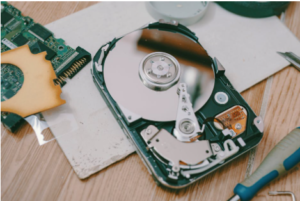
As mentioned earlier, the DoD 5220.22-M standard was primarily designed for magnetic media. Its reliance on overwriting specific sectors is largely ineffective for SSDs and Non-Volatile Memory Express (NVMe) drives due to their inherent architecture:
- Flash Translation Layer (FTL): SSDs use an FTL to manage data placement, wear leveling, and garbage collection. When a host system writes data to a logical block address (LBA), the FTL maps it to a physical block. A subsequent overwrite command for the same LBA might be written to a different physical block, leaving the original data intact on the drive.
- Wear Leveling: To extend the lifespan of flash memory, SSDs distribute writes evenly across all memory cells. This means that data intended to overwrite a specific location might be redirected to an entirely different physical location, leaving the original data accessible in a different part of the drive.
- Over-Provisioning and Bad Blocks: SSDs reserve a portion of their capacity for over-provisioning and to replace bad blocks. Data can reside in these inaccessible areas, making it impossible to overwrite them through standard software commands.
- Data Remanence: Due to these factors, software-based overwriting techniques, even multi-pass methods, cannot guarantee the complete erasure of data on SSDs. Studies, such as “Reliably Erasing Data From Flash-Based Solid State Drives,” have highlighted these challenges, demonstrating that traditional wiping methods often leave recoverable data on SSDs.
For SSDs and NVMes, current standards like NIST SP 800-88 Rev. 1 and IEEE 2883 recommend specific methods:
- ATA Secure Erase / SCSI Sanitize: These are built-in firmware commands that instruct the drive’s controller to internally erase all user data areas, including inaccessible ones. These commands are often the most effective software-based sanitization methods for SSDs, as they bypass the FTL and directly address the physical memory cells.
- Cryptographic Erase (CE): For self-encrypting drives (SEDs), CE involves destroying the encryption key used to protect the data. Since all data on the drive is encrypted, rendering the key unusable makes the data irrecoverable. This is an extremely fast and effective method, provided the drive’s encryption is robust and the key management is secure.
Sanitization Methods for Diverse Media Types
The array of storage media used in modern IT environments necessitates a tailored approach to sanitization:
- Hard Disk Drives (HDDs): For modern HDDs, NIST SP 800-88 states that a single overwrite pass with a fixed pattern (e.g., zeros) is generally sufficient to prevent data recovery, even with advanced laboratory techniques. For older HDDs (pre-2001 or less than 15 GB) and floppy disks, a triple-overwrite might still be recommended. Degaussing is also an effective method for HDDs, as it uses a strong magnetic field to scramble the data, rendering the drive unusable.
- Solid-State Drives (SSDs) and Flash Media (USB drives, SD cards): As discussed, traditional overwriting is unreliable. The preferred methods are ATA Secure Erase/SCSI Sanitize commands or Cryptographic Erase for SEDs. Physical destruction is often recommended for the highest security levels or when internal erase commands cannot be verified.
- Magnetic Tape: Degaussing is highly effective for magnetic tapes, as it erases the magnetic patterns that store data. Unlike HDDs, degaussing does not necessarily render magnetic tapes unusable, making them potentially reusable after sanitization.
- Optical Discs (CDs, DVDs, Blu-rays): Data on optical media is physically etched or burned. Software overwriting is impossible. Physical destruction, such as shredding, grinding, or incineration, is the only effective method.
- Smartphones and Tablets: These devices typically use flash memory. Sanitization involves factory resets combined with secure erase functions if available, or cryptographic erase for encrypted devices. Due to their complex architecture and potential for hidden data, physical destruction is often the most secure option for highly sensitive data.
- Network Devices (Routers, Switches, Firewalls): Many network devices contain non-volatile memory (e.g., flash memory for firmware, configuration). Sanitization involves factory resets, firmware reinstallation, and potentially secure erase commands if available. For high-security contexts, physical destruction of memory components may be necessary.
- Volatile Memory (RAM, DRAM, SRAM): Data in volatile memory is lost when power is removed. Simply powering off the device and ensuring it remains unpowered for a sufficient duration (e.g., 60 seconds for most modern RAM) is typically sufficient for sanitization. For highly sensitive applications, repeated power cycling might be employed, though typically unnecessary.
Physical Destruction vs. Software-Based Sanitization
Choosing between software-based erasure and physical destruction is a critical decision in data sanitization, often dictated by data sensitivity, media type, and compliance requirements. While software methods aim to render data unrecoverable while preserving the hardware, physical destruction permanently destroys both the data and the storage device.
When Physical Destruction is Mandatory
For the highest levels of security, particularly when dealing with classified information, physical destruction is often the mandated method. The DoD and other government agencies typically reserve physical destruction for media containing Top Secret data or when software-based methods cannot be fully verified.
Common physical destruction methods include:
- Shredding: Devices are passed through an industrial shredder, reducing them to small, unrecognizable fragments.
- Disintegration/Pulverization: Similar to shredding but typically resulting in even finer particles, often specified by particle size requirements (e.g., less than 2mm for highly sensitive data).
- Incineration: Burning media at extremely high temperatures to completely destroy its components. This is particularly effective for optical media and some solid-state devices.
- Degaussing: For magnetic media only, a powerful magnetic field is used to neutralize the magnetic domains, rendering data unreadable. While it can render HDDs unusable, it may allow for the reuse of magnetic tapes.
- Crushing/Bending: Applying extreme force to deform and break the storage media, making data recovery impossible.
- Knurling: A process that creates a pattern of indentations on the surface of magnetic media, effectively destroying the data tracks.
For classified environments, such as those governed by the NSA/CSS Policy Manual 9-12, physical destruction is often the default. This manual provides detailed procedures for the sanitization and destruction of storage devices for disposal or recycling, including specific methods and equipment approvals. For instance, media that has contained Cryptographic (CRYPTO) material cannot be sanitized by any means other than destruction. Similarly, malfunctioning drives that cannot be overwritten or degaussed reliably also require physical destruction to prevent data remanence.
Even for unclassified but sensitive data, physical destruction offers an undeniable assurance that data cannot be recovered. Organizations often combine software erasure with physical destruction for end-of-life hardware, ensuring maximum security. For example, a hard drive might first undergo a NIST-compliant overwrite, followed by shredding. For those involved in the secure disposal of IT assets, understanding the nuances of physical destruction is paramount.
The Role of Cryptographic Erase in 2026
In 2026, cryptographic erase (CE) has emerged as a cornerstone of modern data sanitization, especially for self-encrypting drives (SEDs). Unlike traditional overwriting, CE does not involve writing new data over old. Instead, it leverages the drive’s built-in encryption capabilities.
When an SED is provisioned, all data written to it is automatically encrypted using a unique encryption key, typically stored in hardware on the drive itself. Cryptographic erase simply involves deleting or cryptographically overwriting this encryption key. Since the key is essential to decrypt the data, its destruction renders all encrypted data on the drive instantly and permanently unreadable.
The advantages of CE are significant:
- Speed: CE is virtually instantaneous, as it only involves deleting a small encryption key rather than overwriting potentially terabytes of data.
- Completeness: Because all data is encrypted, destroying the key effectively sanitizes the entire drive, including areas inaccessible to software overwriting (like bad blocks or over-provisioned areas on SSDs).
- Efficiency: It allows for the rapid repurposing or disposal of SEDs without the lengthy process of traditional data wiping.
- Security: When properly implemented with robust encryption and secure key management, CE offers a highly secure method of data sanitization.
NIST SP 800-88 Rev. 1 explicitly recognizes CE as an acceptable “Purge” method for SEDs. The effectiveness of CE relies on the strength of the drive’s encryption and the secure deletion of the encryption key. This method is particularly relevant for DoD systems and other high-security environments that increasingly utilize SEDs to protect data at rest and facilitate rapid, secure sanitization. The implementation of full-disk encryption from the outset also provides a robust “remote wipe” capability, where the encryption key can be remotely deleted if a device is lost or stolen, immediately rendering its data inaccessible.
Verification, Certification, and Compliance
The final, and arguably most crucial, stages of any data destruction process involve verification, certification, and ensuring compliance with relevant standards and regulations. Without proper verification, even the most rigorous sanitization methods cannot guarantee data eradication.
Importance of Post-Wipe Verification
Verification is the process of confirming that data sanitization has been successfully executed and that data is, indeed, unrecoverable. It transforms a data destruction attempt into a data destruction success. This step is vital for several reasons:
- Assurance: It provides objective proof that sensitive information has been permanently removed, mitigating the risk of data breaches.
- Compliance: Many regulatory frameworks, such as HIPAA, GDPR, and FISMA, require not just data sanitization but also documented proof of its effectiveness.
- Risk Mitigation: Verification helps identify any failures in the sanitization process, allowing for corrective actions before media leaves an organization’s control.
Verification methods vary depending on the sanitization technique:
- Software Erasure: After an overwrite process, verification involves reading a representative sample or, ideally, all user-addressable sectors of the drive to confirm that the overwrite pattern is present and no original data remains. Advanced software tools provide detailed logs and reports of this process, including any sectors that could not be overwritten.
- Degaussing: Verification for degaussed media involves using a magnetic field tester to confirm that the drive’s magnetic properties have been neutralized. For HDDs, this also means confirming the drive is no longer functional.
- Physical Destruction: Verification involves visual inspection to ensure the media has been physically rendered unusable, meeting specified particle size requirements (e.g., for shredding or disintegration). For example, inspecting the residue of a shredded hard drive to ensure no platters or chips remain intact.
- Cryptographic Erase: Verification involves attempting to access data on the SED after the key has been destroyed. If data is unreadable, the CE was successful. This often includes checking the drive’s status via its firmware.
The NIST SP 800-88 guidelines emphasize the importance of verification for all sanitization methods, recommending full or representative sampling to ensure data cannot be recovered.
Understanding the Certificate of Destruction
A Certificate of Destruction (CoD) is a formal document issued by a data destruction service provider, confirming that data-bearing media has been securely sanitized or destroyed in accordance with agreed-upon standards. This document is far more than just a receipt; it is a critical piece of evidence for legal, compliance, and auditing purposes.

Key aspects of a CoD include:
- Legal Evidence: It serves as legal proof of due diligence, demonstrating that an organization has taken reasonable steps to protect sensitive information. In the event of an audit or a data breach inquiry, a CoD can be instrumental in proving compliance and mitigating potential liabilities.
- Intellectual Property Protection: For businesses, a CoD protects intellectual property by confirming that proprietary data, trade secrets, and other confidential information have been permanently eradicated, preventing their exposure or unauthorized use.
- Brand Safeguarding: It helps safeguard an organization’s reputation and brand integrity by demonstrating a commitment to data security and responsible disposal practices.
- Gray Market Prevention: For product destruction, a CoD can confirm that off-spec, counterfeit, or expired goods have been destroyed, preventing them from entering secondary markets and causing brand damage or consumer harm.
- Audit Readiness: Maintaining a comprehensive record of CoDs is essential for audit readiness, providing an organized and verifiable trail of all data destruction activities.
When selecting a data destruction service, it is crucial to ensure they provide a detailed CoD that includes information such as the date of destruction, the methods used, the serial numbers of the destroyed media, and a clear statement of compliance with relevant standards (e.g., NIST SP 800-88, HIPAA, GDPR). This level of documentation is indispensable for maintaining a secure and compliant data lifecycle.
Frequently Asked Questions about Data Destruction
Is DoD 5220.22-M still a valid requirement for federal contractors?
No, as of April 2026, the DoD 5220.22-M standard is no longer an official or mandated requirement for federal agencies or contractors for data sanitization. The three-pass method was removed from official DoD guidance in a 2001 memo and has not been specified for overwriting hard drives since at least 2006. The DoD now mandates that contractors and federal agencies follow NIST SP 800-88 Guidelines for Media Sanitization. The 2021 NISPOM rule also does not specify data sanitization methods, deferring to broader government standards. Organizations still citing DoD 5220.22-M are often adhering to outdated internal policies or misinterpreting current requirements.
What is the difference between clearing and purging under NIST standards?
Under NIST SP 800-88, “Clear” and “Purge” are distinct sanitization categories:
- Clear applies logical techniques to sanitize data in all user-addressable storage locations, rendering data unrecoverable by keyboard or disk-level techniques. For example, overwriting data with a single character (like zeros) on an HDD. The media can often be reused in the same or a different security environment.
- Purge is a more rigorous method that renders data unrecoverable even with advanced laboratory techniques. This can involve physical or logical techniques. Examples include using cryptographic erase (CE) on self-encrypting drives, secure erase commands on SSDs, or degaussing (for magnetic media where applicable). Purged media can typically be released to an environment with a lower security posture. Both methods aim to make data unrecoverable, but Purge employs more robust techniques to thwart sophisticated recovery attempts.
Why is degaussing ineffective for solid-state drives?
Degaussing works by exposing magnetic media (like HDDs or magnetic tapes) to a powerful magnetic field, which randomizes the magnetic domains that store data. Solid-state drives (SSDs), however, store data using flash memory chips, which are electronic components that use electrical charges to represent data, not magnetic properties. Therefore, applying a magnetic field to an SSD has no effect on the data stored within its chips. For SSDs, methods like ATA Secure Erase, cryptographic erase, or physical destruction are required for effective sanitization.
Conclusion
Navigating the complexities of data destruction in 2026 demands a sophisticated understanding of evolving technologies, updated standards, and stringent regulatory requirements. The era of relying solely on the antiquated DoD 5220.22-M standard is long past. Organizations, particularly those handling sensitive or classified information, must embrace modern frameworks like NIST SP 800-88 and emerging standards like IEEE 2883 to ensure truly secure data sanitization.
The choice of method—whether software-based erasure, cryptographic erase, or physical destruction—must be carefully aligned with the media type, data sensitivity, and specific compliance needs. For magnetic media, a single overwrite is often sufficient, while solid-state drives necessitate specialized commands or outright physical destruction. Beyond the technical execution, robust hazardous materials logistics and an ironclad chain of custody are critical for managing the physical disposition of IT assets, safeguarding both data and the environment.
A comprehensive data sanitization strategy is not just about preventing data breaches; it’s about maintaining trust, ensuring regulatory alignment, and upholding an organization’s reputation in an increasingly data-driven world. By prioritizing verification, obtaining certifications, and partnering with experts in secure data destruction and Hazardous logistics for DOD data destruction, businesses can confidently navigate this intricate landscape and future-proof their data security posture.
For further information on managing universal waste and other hazardous materials, explore comprehensive resources on environmental compliance. Learn more about universal waste management.