Understanding Frac Sand and Its Industrial Importance
The modern energy landscape relies on a crucial, often unseen, component: frac sand. This specialized silica sand plays a vital role in unlocking significant oil and natural gas reserves through hydraulic fracturing. Understanding its journey from the earth to the wellhead is key to appreciating its impact.
In this extensive guide, we will explore the comprehensive world of frac sand processing. We will delve into what frac sand is and why its unique properties are so essential. Our exploration will cover the detailed steps involved in its production, from initial mining to the final product.
We will also examine the rigorous quality assurance measures and the environmental considerations inherent in these operations. As we discuss the intricate workings of frac sand facilities, understanding industrial environmental compliance is paramount. Additionally, we will examine the economic implications for communities and the technological innovations continuously shaping this industry.
Frac sand, short for fracturing sand, is a high-purity silica sand with unique physical characteristics that make it indispensable in the oil and natural gas industry. Specifically, it’s a type of proppant—a material used to “prop open” the tiny fractures created during hydraulic fracturing, or “fracking.” Without these proppants, the fractures would close under the immense pressure of the earth, preventing the flow of hydrocarbons.
The sand’s exceptional quality stems from its composition, primarily durable quartz sandstone. Its high purity, typically over 99% silica, along with specific sphericity, roundness, and compressive strength, allows it to withstand extreme downhole pressures and temperatures. These attributes ensure that oil and gas pathways remain open, maximizing extraction efficiency.
The demand for frac sand has been substantial. Historically, regions like the Great Lakes, encompassing Illinois, Minnesota, Michigan, and Wisconsin, were significant suppliers, contributing approximately 70% of the silica sand used in America as a proppant in 2014. Wisconsin, in particular, was a major hub, with 44 active mines accounting for almost half the nation’s installed frac sand capacity in 2017. However, the industry has seen shifts, with newer, in-basin sources emerging closer to drilling sites, especially in Texas and New Mexico. The U.S. shale industry alone consumed an estimated 112 million tons of proppant in 2022, underscoring the industry’s scale. For a broader geological and industry overview of frac sand mining in the U.S., the U.S. Geological Survey provides valuable insights.
Physical Attributes and Performance Standards


The effectiveness of frac sand hinges on a precise set of physical attributes, each meticulously controlled during processing to meet stringent industry standards.
- Grain Size: Frac sand is categorized by specific grain sizes, often referred to by mesh numbers (e.g., 20/40, 40/70, 100 mesh). A “20/40 mesh” sand, for instance, means particles pass through a 20-mesh sieve but are retained on a 40-mesh sieve, typically falling within the 0.6 to 0.8 millimeters range. This precise sizing, determined through sieve analysis, is crucial for maintaining optimal conductivity within the fracture.
- Sphericity and Roundness: These properties describe the shape of the individual sand grains. High sphericity (how closely a particle approaches a sphere) and roundness (the sharpness of its edges) are vital. Rounder, more spherical grains pack together more efficiently, creating larger pore spaces for fluid flow and reducing the risk of crushing under pressure. Standards often require sphericity and roundness of 0.6 or greater.
- Compressive Strength: This refers to the sand’s ability to withstand the extreme pressures found deep underground. Frac sand must possess high compressive strength, typically ranging from 6,000 to 14,000 pounds per square inch (psi), to prevent it from breaking down into smaller particles (fines) that could clog the fracture.
- Turbidity: This measures the cleanliness of the sand, specifically the amount of fine, suspended particles (silt and clay) present. High turbidity indicates impurities that can reduce conductivity. Processing aims for low turbidity, typically below 250 NTU (Nephelometric Turbidity Units).
- Acid Solubility: This test determines the percentage of non-silica contaminants that could dissolve in the acidic fluids sometimes used in fracturing. Industry specifications generally require contaminant percentages to be below 3%.
These rigorous specifications highlight the complexity of producing high-quality frac sand. For more detailed information on the requirements and processing solutions to meet these standards, McLanahan’s Frac Sand Plants page offers valuable insights.
The Multi-Step Frac Sand Production Process
The journey from raw silica deposit to specialized frac sand is a complex, multi-stage operation. It begins with careful site selection and geological assessment to identify high-purity quartz sandstone formations.
Mining Operations
Most frac sand is extracted through surface mining, involving open-pit or quarry operations. This process starts with overburden removal, where layers of soil, clay, and non-silica rock are stripped away to expose the valuable sandstone deposit. Heavy machinery, such as industrial scrapers and tracked excavators, is used for this initial excavation.
Once exposed, the sandstone extraction begins. Because the sand is actually in rock form, it must be carefully liberated. Large sandstone deposits may require controlled blasting to break them into manageable sizes. This is followed by pulverization and crushing with industrial crushers (such as jaw, cone, or impact crushers) to reduce the rock to smaller fragments, preparing it for subsequent processing steps. The goal is to liberate the individual silica grains while minimizing internal stress fractures that could compromise their strength.
For a general overview of where frac sand is found and how it is mined, the Wisconsin Geological Survey provides a concise summary.
Here’s a list of key quality assurance tests performed throughout the production process:
- Sieve Analysis: To determine particle size distribution.
- Computer Analysis: For detailed particle size and shape properties.
- Crush Resistance Test: To measure the sand’s durability under pressure.
- Acid Solubility Test: To identify and quantify non-silica contaminants.
- Sphericity and Roundness Measurement: To assess grain shape.
- Turbidity Test: To determine sand cleanliness.
Wet Processing and Classification
After initial crushing, the material moves into the wet processing stage, a critical phase for purifying and classifying the sand.
- Washing and Desliming: The crushed sand is aggressively washed to remove impurities like clay, silt, and other deleterious materials. This often involves high-pressure water sprays and mechanical agitation. Hydrocyclones are commonly used here to deslime the particles, separating the finer, lighter clay particles from the heavier sand grains.
- Hydraulic Classifiers (Hydrosizers): For precise size separation, especially in the finer ranges (e.g., 30 to 140 mesh), hydraulic classifiers such as Hydrosizers are used. These operate on the principle of “hindered settling,” where an upward flow of water separates particles based on their size and density. Finer particles are carried away, while coarser, valuable frac sand settles.
- Attrition Scrubbers: If stubborn clays adhere to the sand grains, attrition scrubbers are used. These machines create a high-density slurry where sand particles rub against each other, effectively “scrubbing” off the clay through particle-on-particle attrition. The liberated clays are then washed away.
- Dewatering: Once purified and classified, the sand is dewatered to reduce its moisture content. Equipment such as dewatering screens removes excess water, typically reducing moisture to 10-15%. This step is crucial for reducing the energy required in the subsequent drying phase.
For a deeper dive into the technologies involved in this stage, McLanahan offers an informative blog post titled “Frac Sand Wet Processing: Key Technologies.” Additionally, an article on Wet Frac Sand Processing provides an overview of screening, classification, dewatering, and waste treatment.
Dry Processing and Sizing
The final stages of frac sand production focus on drying, precise sizing, and preparing the product for shipment.
- Rotary Dryers/Fluid Bed Dryers: The dewatered sand, still containing some moisture, enters large industrial dryers. Rotary dryers tumble the sand through a heated chamber, while fluid bed dryers suspend the sand in a stream of hot air. The goal is to reduce moisture content to less than 0.1%, which is essential for preventing clumping and ensuring proper flow in hydraulic fracturing operations.
- Sizing Screens: After drying, the sand is passed through a series of vibrating sizing screens. These screens precisely separate the sand into various mesh sizes (e.g., 20/40, 40/70, 100 mesh) to meet specific customer requirements. This is where the product is sorted into its final classifications.
- Final Blending and Storage: Different-size fractions may be blended to create custom products. The finished frac sand is then stored in large silos, ready for transportation.
- Rail Load-Outs: Given the massive quantities involved, frac sand is predominantly transported by rail. Facilities often include dedicated rail load-out systems to transfer sand from storage silos into specialized railcars efficiently.
These steps ensure that the frac sand meets the exact specifications required by the oil and gas industry. More information on comprehensive frac sand processing solutions, including dry processing, can be found on McLanahan’s Frac Sand page.
Achieving Industrial Environmental Compliance in Silica Mining
Environmental stewardship is a critical aspect of frac sand mining and processing, necessitating adherence to rigorous regulatory requirements and ongoing environmental assessments. These regulations aim to mitigate the industry’s impact on air quality, water resources, and local ecosystems.
Regulatory bodies, such as the Wisconsin Department of Natural Resources (DNR), oversee various aspects of industrial sand mining. This includes requiring comprehensive environmental assessments before operations begin, ensuring potential impacts are identified and addressed. Key permits include:
- Air Permits: These regulate emissions from processing equipment (such as dryers and crushers) and control fugitive dust from mining areas, stockpiles, and transportation routes. Operations exceeding certain production thresholds must submit detailed fugitive dust plans.
- Water Permits: These cover stormwater management, high-capacity well use (as one mine can demand up to 2 million gallons of water a day), and the discharge of process water. Regulations also address the protection of wetlands and waterways.
- Reclamation Plans: Before any mining commences, detailed plans for mine reclamation are required, outlining how the land will be restored to a productive state after mining ceases.
- Local Zoning: Beyond state and federal regulations, local governments play a significant role through zoning ordinances, influencing where mines can be sited and how they operate. For example, in Wisconsin, specific administrative codes, such as NR 135, Wis. Adm. Code, govern nonmetallic mining reclamation.
The Minnesota Department of Natural Resources also provides extensive information on DNR and Silica Sand, including relevant legislation and frequently asked questions.

Best Practices for Maintaining Industrial Environmental Compliance
Effective environmental compliance in frac sand processing extends beyond merely obtaining permits; it involves implementing proactive best practices to minimize environmental impact, particularly concerning air quality.
Controlling fugitive emissions—dust that escapes from non-point sources—is paramount. Best practices include:
- Enclosed Conveyors: Transporting sand in enclosed systems reduces dust generation.
- Windbreaks: Strategically placing natural or artificial barriers around stockpiles and processing areas helps mitigate wind-blown dust.
- Water Sprays: Regular application of water to unpaved roads, stockpiles, and active mining areas suppresses dust.
- Vegetation: Establishing and maintaining vegetation around mine perimeters acts as a natural dust filter and windbreak.
Beyond fugitive dust, point source emissions from processing equipment require robust solutions. Advanced dust control technologies are essential. We regularly explore Dust Collection Innovations for Mining and Mineral Processing and offer insights into Solving the Dust Issue: Enhanced Solutions for Mining and Mineral Processing. Proactive measures, such as regular compliance audits and robust preventive maintenance schedules for pollution control equipment, are also critical to ensuring continuous adherence to environmental standards.
The Role of Monitoring in Industrial Environmental Compliance
Continuous monitoring is the backbone of environmental compliance, especially in industries that deal with potential health hazards such as crystalline silica.
- Ambient Air Monitoring: Facilities often deploy ambient air monitors around their perimeters to track levels of PM10 (particulate matter less than 10 micrometers) and PM2.5 (particulate matter less than 2.5 micrometers), which can include respirable crystalline silica. These measurements help assess the effectiveness of dust control measures and ensure compliance with air quality standards.
- Crystalline Silica Exposure: Exposure to respirable crystalline silica is a serious health concern, potentially leading to silicosis and lung cancer. A concerning statistic highlights this risk: In one study, 79 percent of air samples at frac sand sites exceeded the exposure limit for silica dust, with a third exceeding levels that most respirators couldn’t remove from the air. This underscores the critical need for effective dust control and vigilant monitoring. For further information on silica exposure risks, the August 2011 DNR Report to the Natural Resources Board: Silica Study provides valuable context.
- Stack Testing and Continuous Emissions Monitoring (CEMs): For point sources like dryer stacks, stack testing is periodically performed to measure specific pollutant concentrations. Some facilities may also employ Continuous Emissions Monitoring (CEM) systems to track emissions in real time, providing immediate data on compliance and operational efficiency.
Advanced Air Pollution Control and Dust Collection Solutions
Given the inherent dust-generating nature of frac sand processing, advanced air pollution control and dust collection solutions are not just regulatory necessities but operational imperatives. The goal is to capture and remove particulate matter, especially silica dust, from the air to protect workers and surrounding communities.
Effective systems begin with well-designed ventilation and hood design at dust-generating points (e.g., crushers, screens, dryers, transfer points). This captured air is then channeled through ductwork to a central dust collector. For a comprehensive overview of available solutions, our Dust Collection System page provides a starting point, and our guide, How to Choose a Dust Collection System, can help navigate the selection process.
Here’s a comparison of common wet scrubbers and dry dust collectors:
Feature Wet Scrubbers Dry Dust Collectors (Baghouses) Principle Captures particles in a liquid (usually water) Captures particles on fabric filters Particulate Removal Effective for fine and sticky particles Highly effective for fine, dry particulate matter Gas Cooling Excellent for cooling hot gas streams Limited cooling capabilities Moisture Tolerance Ideal for high moisture exhaust Sensitive to moisture; can lead to bag blinding Maintenance Requires wastewater treatment, corrosion management Filter bag replacement, compressed air system maintenance Secondary Waste Sludge or contaminated water Collected dry dust (can often be recycled or disposed of easily) Silica Dust Control Effective, can also handle combustible dust Highly effective for respirable crystalline silica Dry Dust Collection Systems.
Baghouses are a cornerstone of dry dust collection in frac sand processing. These systems use large fabric filter bags to capture particulate matter. As dust-laden air enters the baghouse, particles are trapped on the filter bags’ surfaces, while clean air passes through. Our TubeJet Baghouse Dust Collectors are designed for high-efficiency particulate removal.
The performance of a dry dust collector heavily relies on the quality and type of its filter bags. Materials such as Polyester Felt are commonly used for their durability and filtration efficiency. Understanding the characteristics and benefits of different filter fabrics, as detailed in our Filter Fabric Feature: Discover the Benefits of Polyester Felt, is crucial for optimal operation. A key feature of modern baghouses is pulse-jet cleaning, which periodically sends a burst of compressed air into the bags to dislodge the accumulated dust, ensuring continuous operation and maintaining filtration efficiency.
Wet Scrubbing Systems
For certain applications, particularly those involving high moisture content or potentially combustible dusts, Industrial Wet Scrubbers offer an effective alternative. These systems capture particulate matter by bringing the dust-laden gas stream into contact with a scrubbing liquid, typically water.
Common types include:
- Venturi scrubbers: These accelerate the gas stream through a constricted throat, creating high turbulence that atomizes the scrubbing liquid and enhances particle capture.
- Packed towers: Gas flows upward through a packed bed while liquid flows downward, providing a large surface area for gas-liquid contact and particle removal.
Our page, What is a Wet Scrubber?, explains the fundamentals of these devices. The choice between wet and dry systems depends on the specific process conditions and pollutant characteristics. Our blog post, Wet vs. Dry Systems: Which is Best for Your Air Pollution Control Challenge?, provides a detailed comparison to guide decision-making, especially when dealing with high moisture exhaust.
Maintenance and Filter Bag Optimization
Consistent performance of dust collection systems hinges on diligent maintenance and proper filter bag management. Regular dust collector maintenance is essential to prevent costly downtime and ensure regulatory compliance. Our blog post, Avoiding Costly Baghouse Repairs: Dust Collector Preventive Maintenance Checklist, offers practical advice for establishing a robust maintenance program.
The lifespan and efficiency of a baghouse are directly linked to its dust collector replacement bags. Over time, filter bags degrade, leading to reduced filtration efficiency and increased emissions. Understanding when and how to replace them is critical. Our article, A Deep Dive into Filter Bags for Dust Collection Systems, provides comprehensive information. Furthermore, selecting the correct filter media for specific dust characteristics is paramount. Our guide on How to Select the Correct Filter Media helps operators make informed decisions, optimizing system performance and longevity.
Water Management and Tailings Disposal in Wet Processing
Water is an indispensable resource in frac sand wet processing, used extensively for washing, classification, and dust suppression. However, its consumption and subsequent management pose significant environmental challenges. A typical mine can demand up to 2 million gallons of water a day, making efficient water use and recycling crucial.
Modern frac sand facilities increasingly implement closed-loop systems to minimize fresh water intake and maximize water recycling. This involves treating and reusing process water within the plant. Thickeners play a pivotal role here by concentrating the solid particles (tailings) from wastewater, allowing the clarified water to be returned to the process. These systems often utilize flocculants, such as polyacrylamide, to aggregate fine particles, accelerating their settling.
While effective, careful management is essential to prevent potential contamination. Concerns about heavy metals and other impurities in recycled water or discharged effluents highlight the need for robust treatment protocols. The success of such systems is evident in case studies, like the one detailing Taylor Frac’s implementation of a closed-loop system to meet stringent environmental goals.
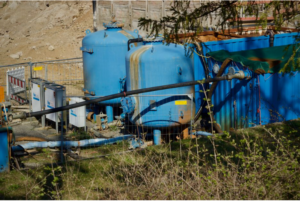
Tailings Management and Dewatering Technologies
The concentrated solid waste from thickeners, known as tailings or sludge, requires careful disposal. Traditionally, these were discharged into large settling ponds, which consume significant land area and pose environmental risks.
To reduce or eliminate reliance on settling ponds, advanced dewatering technologies are now widely adopted:
- Filter Presses: These machines use pressure to squeeze water out of the tailings, producing a solid “filter cake” with very low moisture content.
- Centrifuges: Rapid spinning separates solids from liquids through centrifugal force.
- Belt Presses: These use a series of rollers to press water out of the sludge as it passes along a moving belt.
The resulting dry cake or dewatered solids are much easier and safer to handle. They can often be used for mine backfilling as part of the reclamation process, returning material to the mined-out areas and aiding in land restoration. This approach not only minimizes environmental impact but also reduces the need for new disposal sites. For a comprehensive look at these solutions, McLanahan’s Frac Sand Processing Solutions Brochure offers detailed information.
Economic and Community Implications of Frac Sand Mining
Frac sand mining has brought significant economic shifts to many rural communities, particularly in the Midwest. Initially, the “sand rush” created new jobs and generated substantial tax revenue for local governments, boosting local economies. However, this economic activity has often been characterized by boom-and-bust cycles, closely tied to volatile demand for oil and natural gas.
When the market experiences downturns, the consequences for these communities can be severe. We’ve seen instances of Wisconsin frac sand mines going idle or bankrupt, leading to widespread layoffs. This volatility is compounded by shifts in the industry, such as new mines opening up in Texas and New Mexico closer to drilling sites, reducing the demand for sand from traditional sources.
Beyond employment, the industry can strain local infrastructure, leading to damage from heavy truck traffic. Residents also frequently report noise and light pollution from 24/7 operations, which impact their quality of life. These factors can create tension between mining companies and residents, making community relations a critical yet often challenging aspect of operations.
Frequently Asked Questions about Frac Sand Operations
What is the difference between wet and dry frac sand processing?
Wet processing involves washing, scrubbing, and hydraulic classification of sand using water to remove impurities such as clay and silt, and to initially size the particles. The primary goal is purification and preliminary sizing. Dry processing, conversely, focuses on removing moisture from the sand using industrial dryers (such as rotary or fluid-bed dryers) and then using precise sizing screens for final classification into specific mesh sizes. While wet processing cleans and roughly sizes, dry processing ensures the sand is completely dry, precisely sorted, and ready for market, minimizing moisture content and optimizing fuel consumption for drying.
How do frac sand facilities control crystalline silica dust emissions?
Frac sand facilities employ a multi-pronged approach to control crystalline silica dust emissions. This includes enclosing dust-generating equipment (crushers, screens, conveyors, transfer points), implementing local exhaust ventilation systems with well-designed hoods to capture dust at its source, and utilizing advanced dust collection technologies such as baghouses (dry dust collectors) or wet scrubbers. Baghouses are highly efficient at capturing fine, dry silica particles, while wet scrubbers are suitable for high-moisture applications. Regular maintenance, fugitive dust plans, and ambient air monitoring further contribute to compliance and worker safety.
What are the main regulatory permits required for a frac sand plant?
A frac sand plant typically requires several key regulatory permits to operate. These include air permits to control particulate matter emissions (including crystalline silica dust) from processing equipment and fugitive sources. Water permits are essential for managing stormwater runoff, regulating high-capacity well usage, and controlling any process water discharge. Additionally, facilities must have approved reclamation plans detailing how the land will be restored after mining. Local zoning approvals are also critical, as they dictate where mining and processing facilities can be located and often impose specific operational conditions.
Conclusion
The frac sand industry is a vital, yet complex, component of modern energy production. From its geological origins to its precise processing, every step is designed to deliver a high-performance proppant essential for hydraulic fracturing. As we’ve explored, this process involves intricate mining, wet and dry processing, and rigorous quality control.
However, the industry also operates within a dynamic landscape of environmental and economic considerations. Achieving environmental stewardship demands continuous innovation in advanced air pollution control and water conservation strategies. By adopting best practices, leveraging cutting-edge technologies for dust collection and water management, and adhering to strict regulatory frameworks, the industry can strive for more sustainable operations.
We are committed to providing solutions that support the mining and minerals industry in meeting these challenges. To learn more about our offerings and how we can help your operations achieve environmental excellence, please visit our Mining & Minerals page or contact us directly. You can also explore our Case Studies to see how our solutions have made a difference.